












Editor & Publisher: Rabb Majumder
House # 05 (2nd Floor, 2-C), Road# 04, Banani DOHS, Dhaka - 1206
Phone: +8801715822782
Phone (Advertisement): +8801712863234
Email: rabb.h.majumder@gmail.com, info@securityworldbd.com

The China–Myanmar–Bangladesh Economic Corridor: Strategic Leverage Amid Geopolitical Realignment
Major General (Retd) Dr. Md. Nayeem Ashfaque Chowdhury
14:26, 1 August, 2026
Major General (Retired) Md Nayeem Ashfaque Chowdhury, PhD
Vice Chairman, Osmani Center for Peace and Security Studies

Abstract
The proposed China–Myanmar–Bangladesh Economic Corridor (CMBC) represents a transformative initiative for the region and beyond, envisaging a strategic linkage between Kunming and Bangladesh’s maritime gateways through Myanmar. While it promises regional integration and economic revitalization, its implementation is likely to confront potential geostrategic constraints. The United States may perceive the CMBC as countervailing to its containment posture toward China under the National Security Strategy (NSS) 2025, despite the doctrinal shift that repudiates decades of overextension and global policing. The revised NSS framework underscores power projection, selective engagement, industrial resurgence, and strategic realism.
For Bangladesh, the CMBC transcends the boundaries of infrastructure—it emerges as a diplomatic instrument to advance Rohingya repatriation, promote regional water-sharing cooperation, enhance connectivity with Southeast Asia, offer an opportunity to maximize the potential of Bangladesh’s ports, and contribute to a rebalanced South Asian security architecture. The corridor thus embodies both opportunity and complexity, demanding nuanced policy calibration to align national interests with evolving regional dynamics.
Strategic Context
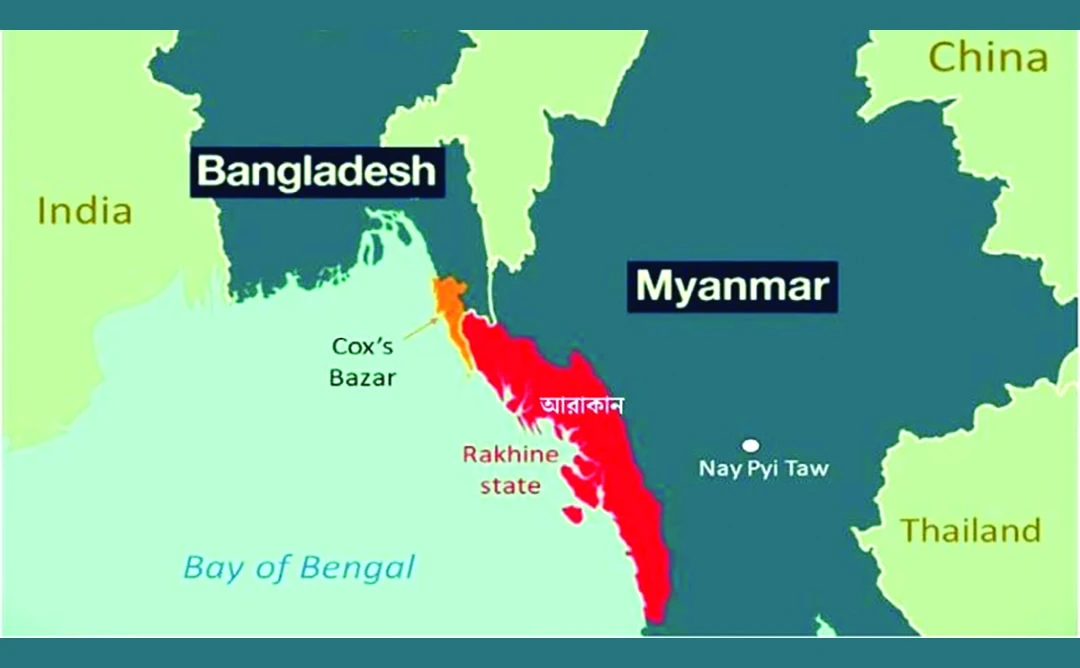
The CMBC revives the BCIM framework, minus India, reflecting China’s pragmatic adaptation to shifting regional realities. The routes currently under consideration—such as Ruili–Namhkam–Mogok–Taze–Kalewa–Hakha–Matupi–Tarawang–Matamuhuri Border Road and the Myitkyina–Wuntho–Jagon–Kalewa–Hakha–Matupi–Tarawang alternative—illustrate both logistical complexity and Myanmar’s infrastructural fragility.
Several proposed alignments are less than 1,000 km, suggesting that Bangladesh could be connected to China through a journey shorter than existing regional corridors. This proximity enhances the corridor’s strategic feasibility, offering a cost-effective and time-efficient alternative to traditional trans-Himalayan routes.
Beyond physical connectivity, the CMBC embodies China’s evolving regional calculus—a shift from broad multilateralism toward selective bilateral engagement anchored in economic pragmatism and geopolitical leverage. The initiative reflects Beijing’s intent to consolidate influence in the Bay of Bengal littoral, complementing its Western Development Strategy and Belt and Road Initiative (BRI) objectives.
For Bangladesh, participation in the CMBC could strengthen strategic autonomy, diversify trade routes, and reinforce its role as a bridge between South and Southeast Asia. It also provides a platform to advance humanitarian diplomacy, particularly in addressing the Rohingya crisis, and to promote regional stability through cooperative infrastructure development.
The corridor’s strategic context is therefore multidimensional—economic, diplomatic, and security-oriented—requiring Bangladesh to balance its engagement between China’s developmental outreach and the United States’ strategic recalibration under NSS 2025. The interplay of these forces will define the operational and political contours of the CMBC.
Strategic Implications
The CMBC carries profound implications for regional geopolitics and economic realignment. It could reshape South Asia’s strategic geography, offering China a shorter and more secure route to the Bay of Bengal, while enabling Bangladesh to emerge as a pivotal node in the Indo-Pacific connectivity matrix.
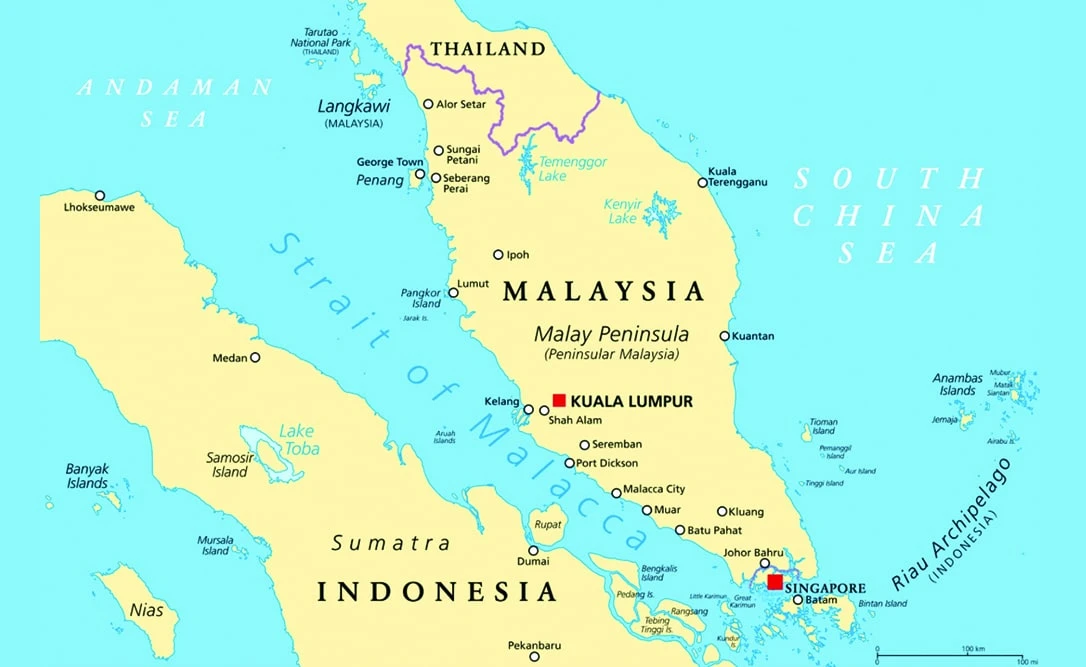
For China, the CMBC complements its BRI corridors—notably the China–Pakistan Economic Corridor (CPEC) and the China–Indochina Peninsula Corridor—by providing an additional maritime outlet that bypasses chokepoints such as the Malacca Strait. This diversification enhances China’s energy security and trade resilience, while deepening its strategic footprint in the Indian Ocean Region (IOR).
For Myanmar, the corridor offers potential economic dividends through transit fees, industrial development, and employment generation. Yet, it also exposes internal vulnerabilities—particularly in conflict-affected regions like Kachin and Chin States, where governance and stability remain fragile. The success of the CMBC will depend on Myanmar’s ability to ensure security guarantees, infrastructure maintenance, and political inclusivity in project implementation.
For Bangladesh, the CMBC presents both opportunity and responsibility. It could catalyze industrial diversification, energy cooperation, and regional diplomacy, positioning Dhaka as a bridge between South and Southeast Asia. The corridor’s integration with Bangladesh’s Port of Chattogram, Payra, and Matarbari deep-sea port could unlock new dimensions of maritime trade and logistics.
However, the initiative also demands strategic calibration—balancing relations among China, the United States, India, and ASEAN, while safeguarding sovereign interests and regional equilibrium. Bangladesh must navigate competing narratives: China’s developmental pragmatism, India’s cautious regionalism, and the United States’ strategic realism.
The CMBC’s trajectory will test the region’s capacity for cooperative pragmatism, where infrastructure serves not merely as an economic conduit but as a platform for peace, resilience, and shared prosperity. It may also redefine the Bay of Bengal’s strategic identity, transforming it from a peripheral maritime zone into a core theatre of Indo-Pacific engagement.
Economic and Diplomatic Dimensions
Economically, the CMBC could stimulate cross-border trade, industrial clustering, and supply-chain integration across the three participating states. The corridor’s alignment with Bangladesh’s Vision 2041 and Delta Plan 2100 underscores its potential to support sustainable growth, energy diversification, and regional logistics modernization.
Diplomatically, the CMBC offers Bangladesh a lever of negotiation in addressing long-standing regional issues. It could serve as a confidence-building mechanism with Myanmar, facilitating dialogue on Rohingya repatriation and border management. Simultaneously, it provides Dhaka with a platform to engage China on water-sharing, climate resilience, and infrastructure financing under equitable terms.
The corridor also aligns with Bangladesh’s Indo-Pacific Outlook (IPO), which emphasizes inclusive connectivity, rules-based cooperation, and economic sustainability. By integrating CMBC objectives within the IPO framework, Bangladesh can project itself as a constructive regional actor, capable of harmonizing great-power interests with national development priorities.
Furthermore, the CMBC could complement existing regional initiatives such as the Bay of Bengal Initiative for Multi-Sectoral Technical and Economic Cooperation (BIMSTEC) and the ASEAN Connectivity Master Plan, creating synergies that enhance trade facilitation, energy exchange, and digital integration.
Security and Strategic Pressure
The CMBC’s security dimension is equally critical. Infrastructure corridors often attract dual-use concerns, where commercial facilities may acquire strategic significance. The corridor’s proximity to the Bay of Bengal and Andaman Sea introduces maritime security implications, particularly regarding naval access, surveillance, and logistics support.
Bangladesh must ensure that its participation remains anchored in transparent governance and civilian oversight, preventing any perception of militarization. Establishing joint security protocols with Myanmar and China could mitigate risks of cross-border insurgency, smuggling, and cyber vulnerabilities.
There are, however, chances that the United States may exert pressure on Bangladesh through instruments such as the Agreement on Reciprocal Trade (ART) signed on February 9, 2026, the General Security of Military Information Agreement (GSOMIA), and the Acquisition and Cross-Servicing Agreement (ACSA)—discouraging Dhaka from proceeding with China’s connectivity plan. Bangladesh must employ its diplomatic mastery to insulate itself from such pressure and portray the CMBC as an independent economic initiative focused on emancipation and infrastructure optimization, rather than geopolitical alignment.
Dhaka should convincingly articulate that sustained economic growth is essential for fulfilling its commitments under bilateral trade and defense arrangements with the United States. Without robust economic expansion, Bangladesh cannot procure U.S. goods and services as envisioned under existing agreements. This argument, framed within the logic of mutual benefit and economic interdependence, can help diffuse strategic tension and preserve Bangladesh’s autonomy in pursuing the CMBC.
Furthermore, Bangladesh should bargain with China to ensure that the corridor cannot be used for military purposes—whether in war or peace. Embedding this assurance within the project’s governance framework would reinforce the CMBC’s civilian and developmental character, strengthen regional trust, and prevent misperceptions among neighboring states.
Logistical Efficiency and Transit Dynamics
While the CMBC promises to reduce delivery time between Kunming and Bangladesh’s ports, it is essential to consider the intra-China logistics chain that precedes the corridor. Goods manufactured in China’s major industrial hubs—such as Guangzhou, Shenzhen, Shanghai, and Tianjin—would first need to reach Kunming, the corridor’s starting point.
China’s advanced rail and highway networks already connect these manufacturing centers to Kunming, enabling rapid freight movement. The average transit time from coastal or northern China to Kunming ranges between 1 and 3 days, depending on distance and mode of transport. Once in Kunming, goods would travel through Myanmar to Chattogram or Cox’s Bazar, covering roughly 1,000 km in 3 to 5 days via multimodal transport (road, rail, and port).
2,000 – 3,500 km Integrated logistics chain 4 – 8 days End-to-end delivery time, including customs and handling.This integrated network would enable door-to-door delivery from any Chinese manufacturing zone to Bangladesh in under a week, compared to the current 12 – 20 days required by sea routes. The CMBC thus represents not only a geopolitical and economic breakthrough but also a logistical revolution, positioning Bangladesh as a transit and trade hub in the Bay of Bengal.
Policy Recommendations
Strategic Alignment
Bangladesh should pursue a balanced engagement strategy, aligning CMBC participation with its broader foreign-policy objectives under the Indo-Pacific Outlook (IPO). This approach must maintain constructive ties with both China and the United States, ensuring that the corridor remains an instrument of economic cooperation rather than geopolitical contestation.
Institutional Coordination
Establish a CMBC Coordination Authority under the Prime Minister’s Office to synchronize planning among ministries, ensure transparency, and manage cross-border logistics, customs, and security. This body should also coordinate with regional partners for technical assistance and compliance with international standards.
Humanitarian Diplomacy
Leverage the corridor’s diplomatic potential to advance Rohingya repatriation through trilateral cooperation mechanisms involving China and Myanmar, supported by international agencies. The CMBC can serve as a confidence-building platform to foster humanitarian dialogue and regional stability.
Economic Integration
Promote industrial zones, logistics hubs, and special economic corridors along the CMBC route to attract investment and enhance export competitiveness. Encourage public-private partnerships and regional value-chain integration to maximize economic spillovers and employment generation.
Environmental and Social Safeguards
Integrate sustainability standards and community participation frameworks to mitigate ecological and social risks. Ensure that infrastructure development aligns with Bangladesh’s Delta Plan 2100, Vision 2041, and SDG 13 (Climate Action) objectives.
Regional Dialogue
Initiate a Bangladesh–Myanmar–China Trilateral Forum to institutionalize dialogue on connectivity, trade, and security cooperation. This mechanism should promote transparency, conflict prevention, and equitable benefit-sharing among participating states.
Strategic Neutrality Clause
Bangladesh should bargain with China to include a formal provision ensuring that the CMBC cannot be used for military purposes—whether in war or peace. Embedding this clause within the corridor’s governance framework will preserve its civilian and developmental character, strengthen regional trust, and prevent misperceptions among neighboring states.
Economic Diplomacy with the United States
Bangladesh must emphasize that economic growth is essential for fulfilling commitments under the Agreement on Reciprocal Trade (ART), GSOMIA, and ACSA. By demonstrating that prosperity enables greater trade and procurement from U.S. industries, Dhaka can transform potential pressure into mutual economic opportunity and maintain strategic balance.
Monitoring and Evaluation
Develop a performance-tracking system to assess the corridor’s progress, transparency, and socio-economic impact. Annual reviews should be published to ensure accountability, maintain investor confidence, and guide policy adjustments.
Public Awareness and Stakeholder Engagement
Launch national awareness campaigns and academic-policy dialogues to build consensus on the CMBC’s benefits. Engaging civil society, academia, and the private sector will enhance legitimacy, inclusivity, and long-term sustainability.
Conclusion
The China–Myanmar–Bangladesh Economic Corridor (CMBC) stands at the intersection of strategic ambition and regional pragmatism. Its success will depend not only on infrastructure and investment but on the political will to transform connectivity into cooperation. For China, the corridor consolidates its western outreach and maritime diversification; for Myanmar, it offers a pathway toward economic recovery and regional integration; and for Bangladesh, it presents a rare opportunity to redefine its geopolitical role—from a peripheral actor to a strategic connector linking South and Southeast Asia.
Bangladesh’s challenge lies in balancing great-power interests while safeguarding national sovereignty. The potential pressure from the United States, through instruments such as the ART, GSOMIA, and ACSA, underscores the need for diplomatic dexterity. Dhaka must frame the CMBC as an economic emancipation initiative, essential for growth and infrastructure optimization, and convincingly argue that sustained development is a prerequisite for fulfilling its trade and procurement commitments with the United States.
Equally important, Bangladesh should bargain with China to ensure that the corridor cannot be used for military purposes—whether in war or peace. Embedding this assurance within the project’s governance framework would reinforce the CMBC’s civilian and developmental character, strengthen regional trust, and prevent misperceptions among neighboring states.
Ultimately, the CMBC symbolizes a new paradigm of regionalism—one that transcends zero-sum geopolitics and embraces shared prosperity through connectivity. If managed with foresight and balance, it could transform the Bay of Bengal into a corridor of cooperation, resilience, and sustainable growth, anchoring Bangladesh’s emergence as a stabilizing force in South Asia’s evolving strategic architecture.
আরও পড়ুন -