








Editor & Publisher: Rabb Majumder
House # 05 (2nd Floor, 2-C), Road# 04, Banani DOHS, Dhaka - 1206
Phone: +8801715822782
Phone (Advertisement): +8801712863234
Email: rabb.h.majumder@gmail.com, info@securityworldbd.com

Death at USAID: Could It Be Murder or Suicide?
John Charles Dalton
15:44, 12 June, 2026
John Charles Dalton
is an International Development Leader with 50+ global assignments across Asia, Africa, the Caribbean, and Europe
Chief of Party / Team Leader for 14 major projects, driving results in governance, public finance, results monitoring, and service delivery
Resident Advisor to Presidents, Prime Ministers, and Cabinet Officers

The United States Agency for International Development (USAID) is dead. That’s a fact. It was unexpected, but not tragic.
Several other donors also are reviewing their policies and reducing their funding for developing countries like Bangladesh. So, while something may not be rotten in Denmark. Other bilateral donors such as the UK, Germany, France and others are reducing their funding commitments.
This article has a point of view, and that point of view may help other donors, even the Multilateral Development Banks (MDB) - such as the World Bank and the Asian Development Bank – to name the biggest dogs - adapt its approach before they meet a fate similar to USAID.
Introduction
This article examines two options for the death of USAID:
Option 1) USAID was “tossed into a woodchipper”1, a gory demise which, according to many ex-USAID storytellers now posting on LinkedIn and/or publishing autobiographical accounts of their experience, has created a huge gap in the global humanitarian service delivery network; or.
Option 2), which is the theme of this article, USAID was slowly deteriorating through a combination of hubris and soft corruption. It was a classic case of institutional suicide: too self-consumed; too fat and happy.
So dear readers, Lay on, McDuff. Here’s my take.
My Background and Perspective
I remember the pride I felt walking into the USAID/Philippines offices in 1978 having been selected as an “international consultant” to undertake an institutional and capacity assessment of the Budget Technical Service within the Philippines Ministry of Budget. I had the chops, but I also felt truly honored. At the time, I was a partner in a small public sector finance consulting company in Boston; had been a senior consultant at KPMG both in Boston and, while on assignment to its Washington DC Office, throughout the USA. More importantly, I had directly relevant public sector planning and management experience as the Director of the Office of Local Affairs for the State of Massachusetts. I knew how things worked! But still, when I left the USA for the Philippines, I felt that I would be working with some of the best and brightest the USA had to offer. I was not intimidated, actually, but full of anticipation and anxiety. After all, USAID then was perceived to be a great institution doing great things. To me, a public sector guy, it was an example of American government at its best. Crème de la crème. Pride.
Over the next two+ years I worked with Frank and George L and George C and Tony and Bill and Chuck and Boy and scores of other top- notch, talented people. My consultancy focused on the synchronization of foreign assisted projects with every phase of the Philippines budget cycle – from planning to closeout. I was co-located at the Budget Technical Service (BTS) office just down the road from Malacanang where Minister Jaime Laya and his Deputies, with whom I interacted regularly, were located. It was a working partnership, as envisaged by JFK when the Agency was created.
USAID was a great idea when it was founded in 1961 and, throughout at least half of its life it was an example of America at its best. When I finished my experience there you would not have found a more enthusiastic advocate for USAID. And, this experience at USAID Philippines was the foundation for my career in development consulting. In retrospect, I believe I enabled USAID projects to move more quickly into implementation. A grateful national rises at the mention of my name? Not so much, but I felt I did good work. Ever since, that has always been my standard – do good work..
Over the next many years, I also worked with UNDP, ADB, DFID and the World Bank. But, very regularly, I also had many, many short and long-term assignments with USAID. I was a Personal Services Contractor (PSC) for USAID Missions in Manila, Islamabad and Addis. I worked as technical consultant in Cairo, Monrovia, Harare, Jakarta, Tunis, Manila (again and again and again) and was the Chief of Party (COP) for USAID projects in Addis, Cairo, Bangkok, Davao, and Dhaka, among other. I was in, but not of, the organization. A bit of distance creates perspective.
For example, as a trusted “USAID advisor”, I was issued two separate passports when I worked for USAID in Gaza and then again when I was working in Ethiopia. I was authorized by USAID to serve as a resident advisor - face to face - with the President of Liberia, the Prime Minister of Zimbabwe, the Minister of Education in Egypt, and the DG of an Anti-Corruption Office in Zambia. All for USAID. There were more than ten Chief of Party (COP) assignments. One relevant local example, I was called in as COP by USAID Bangladesh, to pull a failing M&E projects out of the ditch and put it back on the right path. Mission accomplished.
During this period – over almost fifty years of experience - I watched the Agency change from the excellence I first experienced in 1978 at USAID Philippines to something totally “different”. That simple word – “different” - doesn’t do justice to the transformation of the Agency by the time its storied history came to an abrupt end in 2025. Different is like saying Michael Jackson looked “different” after the surgery… understated a bit. Maybe we could say USAID was disfigured.
Nevertheless, I feel a degree of regret writing an article about why USAID sliced its own throat. I hope that USAID – or something like it – is resurrected in some form or another. Probably, a performance-based approach like the World Bank’s PforR modality (Hire Furqan). I also believe that other international aid organizations may see some of the self-destructive tendencies which I observed at USAID in their own operations and will take steps to avoid their own version of the woodchipper.
The MURDER Option
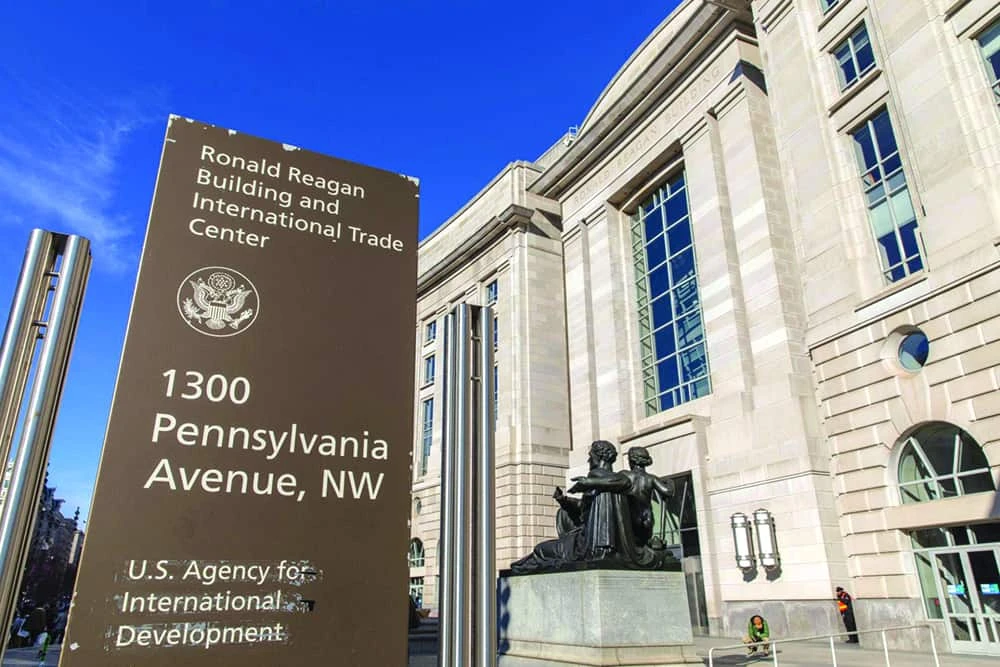
According to many not entirely unbiased (ahem) commentators, the death of USAID will have dire consequences, especially in the area of public health where it is “predicted” that hundreds of thousands will die as a result of the elimination of US foreign assistance. “If we ain’t there you gon’ die sucker” (more on that later). According to this camp, USAID was murdered by the arbitrary and uninformed actions of a high-ranking, elected bozo who shall remain nameless, a South African charlatan and a few hundred “DOGE bros”. The murder option imagines USAID as the US Government’s indispensable soft power killed in the prime of its life. Unfortunately, evidence shows, it died with a whimper not a bang. Presidents and Prime Ministers are not lined up outside the Reagan Building in Washington DC demanding the resurrection of USAID.
USAID’s annual budget cut was around $54 billion. Eighty three percent (83%) of USAID activities were murdered - roughly 5,800 of the 6,200 approved multi-year contract awards. In Bangladesh, one of the donor darlings, the value of the cuts was calculated at $400 -$500 million for over 100 development programs. Poof…vanished. Forget about the money, thousands (Caritas estimates 20,000) very competent Bangladeshis lost their jobs and income. But it goes deeper than that. Many also lost their purpose in life. The woodchipper left both financial and emotional scars.
The estimates of additional deaths which can be tied to these USAID cuts worldwide is a baseline of 500,000 to 700,000. The Center for Global Development estimates that as many as 1,600,000 potential lives lost (seems oxymoronic if not actually moronic, Charles). Nicholas Enrich’s numbers are also pretty exaggerated. And the Lancet’s methodology arrives at even higher numbers, but is highly speculative. All of these doomsday predictions also assume:
1. Parents have no agency and will just watch their children die;
2. Governments will not fill at least part of the gap and respond with additional funding programs; and
3. The US State Department will not step up and support global health initiatives through PEPFAR or similar programs (e.g., money for the Rohingya refugee crisis in Bangladesh escaped the axe)
Fair enough, the cuts will have consequences, but the “sky is not falling”, Chicken Little. I think the “this was murder” crowd are actually looking through a number of jobs lost lens rather than a number of preventable deaths lens. Murder – not so much, but surely a harsh reality.
The SUICIDE Option
According to tradition, closing a coffin for our dearly departed friends and family members requires nine nails. Three on the left; three on the right; two at the foot and a single coup de grace at the head of the coffin. Bang … bang… bang… bang… bang… bang… bang… bang… bang! Nine nails. Closed, sealed, done and dusted.
The nine nails I have selected to seal the USAID coffin are uniquely mine, based on a long- and varied association with USAID, which contributed greatly to my professional development, technical knowledge and income. This is not a hit job or an ungrateful blast from the past. It’s an informed observation.
Anyway, what about those nine nails?
My nine nails are:
1. Losing touch with the Governments USAID was created to serve
2. The unintended consequences of Afghanistan and Iraq
3. NGOs and the humanitarian coup
4. Cronyism and borderline corruption
5. “Becky, Becky, she so fine”
6. Overpaid and overpriced – like me
7. Fracturing project management to satisfy central reporting
8. Localization and other word salads
9. Hubris and self-glorification – the lingering fever dream
This is a concise explanation of why I chose each nail.
1. Losing touch with the Governments it was created to serve
They miss the money; they don’t miss USAID.
In fact, zero, zilch, nada USAID money shows up in a country’s budget whether for recurring costs or infrastructure development. Despite the Paris Declaration recommending the use of country systems for development funds, USAID has found a work-around. USAID conducts a Public Financial Management systems review to determine the adequacy of a country’s fiscal and financial policies and practices to protect USG money from fraud, waste and abuse. What a coincidence, not once in the recorded history of the Agency has a country’s internal controls and financial systems been considered good enough for Uncle Sam. So, USAID funding was off the books. It was “funny money” - but no-one’s laughing now.
Consequently, it is extremely difficult to obtain a true measure of the country-level impacts of USAID cuts. People have tried, but it’s becoming more and more irrelevant. Nevertheless, it is estimated that among the hardest hit, both in relative and absolute terms, were Ukraine, Ethiopia, Kenya, Nigeria, Bangladesh (ergo this article) Afghanistan, Pakistan, West Bank and Gaza.

When President John F. Kennedy established USAID in 1961 he envisioned an Agency with these pre-eminent mandates:
1. Alleviation of the worst physical manifestations of poverty…
2. Enabling countries to achieve self-sustaining economic growth..
3. Individual civil and economic rights would be respected and enhanced
4. Integration of countries into open and equitable economic system
5. Combating corruption and improving transparency and accountability2
And the strategy for achieving these purposes was “partnership” – working together, collaborating, humility and mutual respect. It was not US and THEM…it was WE as in “We the People”.
In the beginning, USAID entered into loan agreements to build things. These loans were the means of demonstrating US engineering design and construction capabilities, leaving a tangible legacy of friendship through both skills transfer and infrastructure development. However, over time, concerns were raised that the USG, already becoming the most prosperous nation known to mankind, was “beggaring thy neighbor” by creating debts that development countries could not easily service without reducing services to its citizens. BANG
2. The unintended consequences of Afghanistan and Iraq
War is hell…they say. But war also creates the need for post-war support and reconstruction from agencies such as USAID. The Marshall Plan for Europe, after the end of World War II, is seared into the memory of all Americans as the way a victor responds to citizens and institutions of a defeated enemy. The USA offers a helping hand to rebuild. That’s the way we do it… they say.
After the end of the “conflicts” in Iraq and Afghanistan, the immediate policy and foreign assistance response of the USG was to mobilize USAID as the tip of the spear for post war reconstruction and institutional change. But, baby, Fallujah was not Brussels or Paris or Rome: it was not a reconstruction effort within the umbrella of Western Civilization. No, no, no, no…the USA was an infidel and for many residents the jihad continued. It wasn’t safe and, furthermore, the prospects of making a difference were on the order of zero to 1%. But still, the USA went all in.
So, with the ghost of the Marshall Plan ghost sitting at the banquo table (For those who know), the challenge was how to get people to show the flag and demonstrate to out dearly beloved Afghani and Iraqi brother and sisters – cough, cough - that we loved them. And in the time honored tradition, dating back to the Roman Empire, USAID used bribes, money and promises of a better future…a year in Fallujah would get you a post in Manila. In addition to moving the young and the restless, USAID lowered its recruitment standards and brought in staffers who, as their careers would demonstrate, were learning on the fly. And the money…OMG, the money.
Finally, the contractors were in heaven. The contract value, the NICRA, the uplifts, the benefits, the whole megillah was a huge payoff. In addition to the legacy contractors who were “smokin’”…new, overnight sensations were created on Monday, funded for millions of dollars on Friday and then became part of the low-bid: low-skill eco-system that characterized USAID post-conflict. BANG
3. NGOs and the humanitarian coup
I consider myself a development professional. By that I mean to say that I work closely with government agencies to “develop” their capacity to deliver services according to their legislated mandate. I did this in the United States long before I set foot in a foreign government agency. Yet over and over again when I would be working WITH senior agency leaders and private sector movers and shakers on say, crafting workforce development initiatives through school-to-work partnerships, I would be approached by some wholly unqualified but admirably sincere NGO staffer who was in the same general space but knew absolute nothing about the politics of development or how budgets get formulated or funds released, or... or.. or… and like me, they were funded by USAID.
I came to realize that this was the tyranny of competitive bidding combined with a saccharine, goody-two-shoes affinity between a USAID staffer and a friend they met at a conference on “Lifting poor women out of poverty through sincerity and snacks”. The International Center for Sincerity and Snacks (ICSS) then would be selected to run a women’s employment program while, concurrently, I was working with the Minister and the top employers in the country on an internship program in the hospitality, pharmaceutical and garment industries. Often USAID would ask me to set up a meeting between the Minister and the NGO, which after the thirty-minute meeting ended and the NGO reps had left, the Minister would call me back into his office and say; “John, who were those people and what do they have to do with us?” BANG
4. Cronyism and borderline corruption
Every project I led was blessed by a magic bullet…a former USAID staff member who had either retired or taken a leave of absence to add their unquestionable insights to project management. Their friendship with resident USAID staff probably had nothing to do with the selection of the contractor. Wait a minute…isn’t that a conflict of interest? Not in the upside-down value system of USAID.
End of project evaluations were intended to provide insight into what worked and what didn’t. I theory it was a consequential review consistent with the Agency’s mandate for transparency and accountability. Selecting the evaluators should have been an arm’s length process, but USAID often selected individuals who could be “influenced” to assassinate the contractor – or some of its staff - to protect the Agency’s poor oversight and management.
Similarly, evaluation reports that are intended to be objective reviews and guidance to USAID to protect taxpayers’ funds were “finalized” by the Agency and made into some anodyne gibberish. At the direction of USAID personnel, evaluation reports in Liberia and Philippines were sanitized. In the latter instance, Mr. Pizza Face probably had a hand in that.
Finally, the humanitarian coup and localization opened the revolving doors for USAID personnel to jump on an INGO or an NGO project for considerably more money. Using contacts acquired while on the inside, they were transformed overnight from a junior staff member into the international expert on global warming. Sweet! BANG
5. “Becky, Becky, she so fine”
Becky is Brad’s spouse. A trailing spouse they call it. And as expertise expands the further away you are from Iowa, Becky is, in her own mind, the nuts! Brad and Becky have two kids, Kinshasa an eight-year-old boy and Kathmandu a six-year-old girl. Brad is posted to country X…along comes Becky and the kids. They get a furnished apartment, paid tuition for their geo-located children, a housekeeper, a nanny, a cook, maybe a gardener, access to the commissary and the American Club. Sure beats anything Becky could get in Death Moans, Iowa.
But Becky is restless. She needs a purpose; a job; another freebie. She tortures and torments Brad. Her almost BA in commerce (less six credits) has to be worth something to USAID. “Brad, it’s not about the money, sweetie, I will gladly work for almost nothing. Is $75,000 too much? Lumumba’s wife, Ngozi, has a job with Save”. So, Brad, imagining the final scenes in the Days of Wine and Roses, goes to his manager, then the Contracts office, then the ultimate fixer for restless wives: the Program Office. With masterful BS, Becky’s experience is effervesced. That time she convened the Book Reading Club in the DRC is now described in “demonstrated experience in convening cross cultural collaborative an participatory sessions in post-conflict situations”. Her less than perfect academic record is bubbled-up to read, “through in-depth associations with public institutions and deep engagement in financial matters”. The day that Becky bought her library card is now proof that she is both a PFM and MEL guru.
Brad, my COR, and Becky’s belabored boytoy, calls me to the Mission and tells me that he thinks Becky would be perfect as an MEL Specialist, He has already cleared it with both the Mission Director and my Home Office (they suck). “But, John, I’m not forcing this. If you think she’s not a good fit, I could always spend the next few months finding something else for her…”
The Home Office folded. I folded. On Monday morning, here comes Becky dropped off by her driver (None of my local staff have a car and driver), all smiles and perfectly turned out in a saree, No heavy lifting anticipated.
To be fair, sometimes Becky drives the gravy train and Brad was the bump on a log. I’ve worked with two Brads…nice people.. like Becky.
The point of course, is that this practice emasculated project management. The lines were blurred. Oversight was compromised. Outputs and outcomes were diminished because these paragons of development followed the Mission’s holiday schedule not like the rest of us mere mortals. When Brad and Becky took Home Leave and left me holding the MEL bag, well that was the hidden joy of working on a USAID project. BANG
6. Overpaid and overpriced
True confession: I never said NO to the money. Nor did any of the thousands of other contractors whose compensation was based on on an arcane USAID practice called “Prior salary history”. It did not matter what the job was worth; the only question was what you were worth. There was a “push me-pull you” game going on internally in which USAID staff would complain that contractors’ compensation – the USAID Max - was higher than their pay. Then they they would get a bump. Then the contractor’s senior staff – the Chiefs of Party - would ask for equal pay…and drag along with them all the other “key personnel” who were key only in their imaginations. There are no M&E or MEL or MERL or MELGBTQ+ personnel in the development world worth $7500/month because the function itself wasn’t worth $7500/month. And yet the labor costs kept going up and up and up and up. So, don’t cry for me Archie and Tina, you were grossly overpaid.
The knock-on effect was an absolute bonanza for contractors. And a moral hazard!! The indirect cost rates that they applied to the labor budgets were supposed to pay for home office support (which also sucked) but the alleged salaries of those individuals was inflated to generate more profits. And round and round it went…soon a simple four year project was $20 million easy, maybe more. And there were scores of those. I was the COP for a teeny-weeny project in Ethiopia which was still five mill and also a $120 million behemoth in the Philippines which had an unconscionable NICRA. I’ve seen how money is made for the contractor and its employees. Before Fatma and Mohamed; Kenjane or Boy; or Zelalem and his family felt the benefit of US aid, all the money was eaten by contractor costs. For that obvious reason, storytelling became an important component of the project’s (and USAID’s) alleged transparency and accountability reporting mechanism. Under pressure from, and according to the vanity of guys like Bob, the biggest piece of camel snot ever to work for USAID (there are exceptions to every rule), my task, in addition to my acting COP duties, was to craft press releases to celebrate every minor “pet” smell like Chanel No.5.
I benefitted from this scam. I commented about it to the VP of the engineering company in the Philippines who was raking in the dough, about the huge up-lift from NICRA. A nervous laugh “hey USAID approved it”. End of story.
Finally, some Missions were subject to something amazing: the post-differential. Where hardships and inability to, what, get a good haircut, added to the base pay. In Bangladesh it was 35%...in a country with a full commissary (a grocery store reserved for poor suffering souls like me who couldn’t get decaffeinated hazelnut coffee in the local market). Gross excess; conspicuous consumption; wine and beer. Some USAID Missions qualify for danger pay. All USAID employees get to send their kids to school tuition-free, most staffed by US citizen teachers.
The whole bloody mess was a club. And like all clubs, it existed for the exclusive benefit of its members. It was class privilege and, in my point of view, was un-American. BANG
7. Fracturing project management to satisfy central reporting
Back in the day, USAID determined that they needed some assurance, some guarantee, that the individual proposed to lead their projects (in USAID parlance, the Chief of Party) was going to be there, working his/her magic, for the at least 50% of the project’s tenure. The labeled this person, the COP, as key personnel. And the individual and the contractor was on notice that this was for the good of the host government. Key personnel … key! Key to success! Not so fast, Gonzales.
USAID’s budgets kept growing and with it pressure from Congress to show results. Evaluations were cranked up to tell the story, but that did not tell a cohesive, consolidated story. Too much variation.
So, USAID developed “standard indicators’, universal metrics for each program type. For example, all agriculture and nutrition initiatives in all USAID Missions had the same indicators for its Feed the Future program. This standardization would facilitate reporting to Congress as data could be aggregated, analyzed and made understandable to all 535 members of Congress… But that was not good enough. USAID in Washington had the bright idea to make MEL staff “key personnel” so they could control the data that would be included in these reports to Congress.
The enormous downside risk was that project managers, like me, were no longer able to adequately supervise and evaluate my staff. The USAID COR in conjunction with the USAID person in DC essentially owned my staff and they – not me – decided when they would be required to crunch the numbers. The fact that, despite this effort USAID is no longer alive is another example of shooting themselves in the head, not the foot. Suicide by standard indicator. BANG
8. Localization and other word salads
To appreciate the effect of Word Salad Sammy on the policy and direction of USAID in the four-year pre-woodchipper period, you have to watch the film “The Final Year” (2017) which provides an inside look at the final year (duh) of President Obama’s foreign policy team, including her nibs. I accepted her self-serving, self-aggrandizing, over-the-top verbosity displayed in this documentary because she is fan (like me) of the Boston Red Sox. But I digress… she was awful in the movie…and awful every time Sergei Lavrov smirked at her while bloviating at the UN. But, she seemed to be committed to a greater role for local engagement and verbally (zzzzzz) promoted a shift away from a heavily centrist USAID. So, combined with her Red Sox personality and a seeming shift to a policy that came to called “Localization”, I waited to see.
Ugh, ugh, double ugh, triple ugh. If BS was electricity she could light the villages that Hillary espoused. With the exception of similar blabbermouths like Senator Chris Coons she talked…and failed…and talked some more…and failed some more. There is no doubt that Elon had her in mind when he gassed up the woodchipper. Bang!
Localization was misguided from the get-go. What could have been a winner was captured by all the NGO goody-two-shoes in DC. Instead of focusing on and funding local government initiatives, including partnerships with local CSOs, the self-servers in USAID channeled grants to local entities that trained unemployed women on how to crochet coasters. Ok, I’m a bit cynical about the abject failure of word-salad-Sammy and the benighted policy of localization fakery. Before I worked for USAID, I was the Director of Local Government Affairs for the State of Massachusetts. I know local…and it ain’t cozying up to friendly little community organizations to the exclusion of legitimate, locally selected Governments. As an afterthought, and because Sammy was not meeting her targets, local governments were added to the list of eligible recipients…too late…too late.. insincere. BANG

US President Donald Trump
9. Hubris and self-glorification – the lingering fever dream
One time the IRISH majorette for private sector engagement – another USAID effort which lacked experience and expertise - was tooting his own horn on LinkedIn. In a fairly long USA I Dit it.. and I alone did it,,, and I am the best at doing it post, I had the pleasure of commenting “You sound like the guy who sold Tolstoy a pencil and then claimed credit for writing “War and Peace”. Zing…his response was predictable chest thumping ..until he too was tossed into the woodchipper
Over time, the Agency and its staff demonstrated insufferable arrogance. USAID sowed the seeds of its own demise and while all death comes unexpectedly, the poor policies, loss of purpose, wobbly missions and weak accountability were the bush meat that leaders fed to their gullible worldwide staff.
The Brads and Beckys thought they were way better than “those people” - who actually had the legal mandate to provide services not them. These USAID civil servants could not sublimate their egos. I take no pleasure in their hardships…No Nanny; No Cry …but let’s hope other development workers don’t succumb to such hubris. Icarus found out the hard way as did Brad and Becky.
One of many projects I COP’ed was Accelerating Capacity for Monitoring and Evaluation (ACME), Those of you who are familiar with classical cartooning will recognize that USAID was Wily Coyote …going over the cliff with a weight tied to his foot…or blowing up the TNT factory…or crashing into the wall and becoming a flat version of himself. For all of his self-destructive behavior, there was always a new episode. In the next iteration please let USAID be the Roadrunner and not Wily Coyote. Beep Beep and BANG.
আরও পড়ুন -