



Editor & Publisher: Rabb Majumder
House # 05 (2nd Floor, 2-C), Road# 04, Banani DOHS, Dhaka - 1206
Phone: +8801715822782
Phone (Advertisement): +8801712863234
Email: rabb.h.majumder@gmail.com, info@securityworldbd.com

Controlling the Choke Points: A Blueprint for Muslim Unity and Geopolitical Leverage
Commodore Jasim Uddin Bhuiyan (Retd)
14:19, 1 August, 2026
Commodore Jasim Uddin Bhuiyan (Retd)

Throughout history, global power has rested on a tri-fold foundation: energy, geography, and strategic intellect. Today, the Muslim world finds itself at a historical paradox. On paper, it possesses the subterranean wealth of the earth, the “black gold” of crude oil and massive natural gas reserves, and commands the world’s most critical maritime transit arteries. Yet, despite these immense natural endowments, Muslim-majority nations often remain politically fragmented, militarily vulnerable, and strategically marginalized on the international stage.
The tragic reality playing out in Palestine, Lebanon, and across the Middle East highlights this structural weakness. While innocent civilians face devastating military strikes and forced displacement, the broader Ummah frequently responds with rhetorical condemnation rather than tangible deterrence. The root of this helplessness is not a lack of wealth or physical geography, but a failure to transform latent assets into unified, calculated negotiating power.
To break this cycle of dependence and external intervention, the Muslim world must undergo a paradigm shift. By recognizing that Almighty Allah has placed the world’s primary maritime “chokepoints” under the direct control or borderlands of Muslim-majority nations, the region can establish formidable diplomatic leverage. If backed by institutional cohesion, technological self-reliance, and an unyielding commitment to justice in Palestine, this geographic reality can reshape global statecraft and compel powers like the United States and Israel to negotiate on equal terms.
Divine Geography: The Seven Chokepoints as Strategic Leverage
Modern global commerce and military mobility depend entirely on maritime shipping. Out of the seven primary maritime chokepoints that dictate global trade, the majority are situated within the geography of the Muslim world. This is not merely a geographical coincidence; it is an extraordinary strategic endowment given to these nations.
Strait of Hormuz: Controlled by Iran and Oman, carrying roughly 20% of global daily petroleum.
Bab el-Mandeb: Bordered by Yemen and Djibouti, serving as the essential gatekeeper to the Red Sea and Suez Canal.
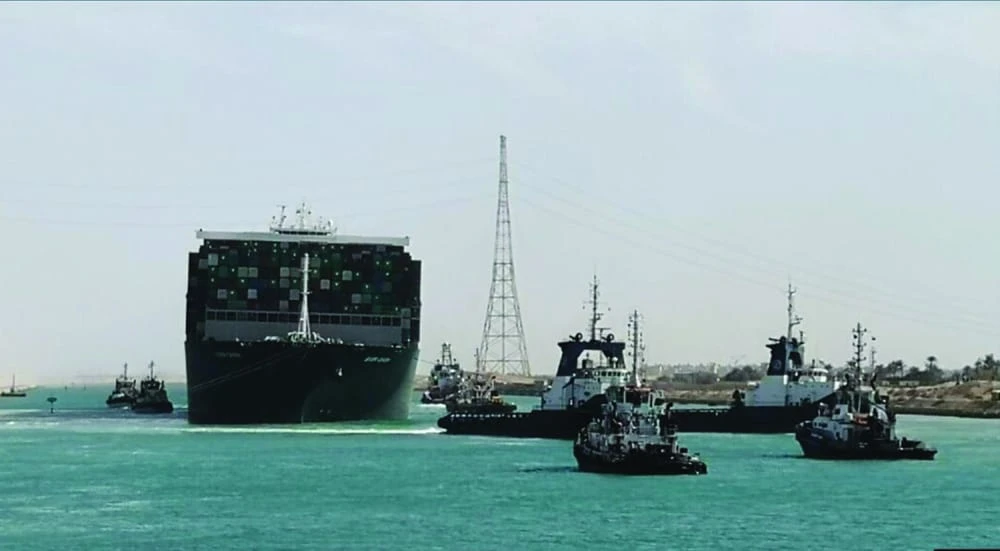
Suez Canal: Administered by Egypt, handling over 12% of global trade.
Turkish Straits: Managed by Turkey, linking the Black Sea to the Mediterranean.
Strait of Malacca: Anchored by Malaysia and Indonesia, handling over a quarter of global commerce.
Strait of Gibraltar: Bordered by Morocco, sealing the western entrance to the Mediterranean.
In realpolitik, holding the keys to the world’s commercial transit lanes provides unmatched diplomatic leverage. If a unified bloc of Muslim nations coordinates its maritime policies, energy outputs, and transit terms, it creates a powerful diplomatic bargaining position. The implicit realization that reckless external military aggression could jeopardize these transit lanes would force global superpowers to reconsider unilateral interventions.
No Peace in the Middle East Without Peace in Palestine
A fatal flaw of Western policy in the Middle East is attempting to bypass Palestinian sovereignty. Normalization deals designed to isolate regional actors have failed to yield stability. There will be no lasting peace in the Middle East while the Palestinian people are denied statehood and dignity.
Relying solely on superior firepower miscalculates the long-term strategic landscape. A unified Muslim world must use its geographic positioning to make peace in Palestine a non-negotiable precondition for global security. Negotiating from collective strength ensures Palestinian grievances can no longer be brushed aside. Stability must extend to Gaza and the West Bank to exist anywhere in the region.
The Modern ‘Ababil’: Constructing the Ababil Treaty Organization
In a historic geopolitical shift, events across the Middle East have demonstrated that technological self-reliance and asymmetric defense can create effective deterrence against formidable military powers. However, isolated national efforts are insufficient to protect the entire region. To transform geographic advantages into lasting security, the Muslim Ummah must move past rhetorical statements and establish a formal institutional architecture: the Ababil Treaty Organization (ATO).
Named after the divine birds sent to defend the sacred against overwhelming force, the modern “Ababil” strategy represents an organized, highly sophisticated collective defense shield, a “Muslim NATO” tailored for 21st-century geopolitics. To function effectively, this alliance must be built upon three core pillars:
First: Cold Geopolitical Realism Over Ideology
NATO succeeds not because its members share identical internal politics, but because they adhere to a single rule: an attack on one is an attack on all. The proposed alliance must adopt this same pragmatic realism. It must actively dismantle the Sunni-Shia divide, bypass linguistic differences, and transcend regional political rivalries. Strategic survival must take precedence over theological and political disputes. If member nations permit sectarian division to dictate their foreign policies, they will remain vulnerable to external exploitation.
Second: Indigenous Defense and Technological Self-Reliance
National security cannot be imported. Wealthy nations that spend hundreds of billions on foreign hardware often find their systems tied to political strings, maintenance restrictions, and sudden supply embargoes. The alliance must pool the financial capital of energy exporters with the advanced engineering, manufacturing, and technological capacities of nations like Turkey, Pakistan, Iran, Malaysia, and Indonesia. By building joint defense industries focused on drone networks, air defense, long-range missile systems, and cyber warfare, the alliance can establish an independent technological shield.
Third: Unified Chokepoint Diplomacy
The alliance must integrate the management of maritime access into its collective diplomatic posture. If an external superpower or regional actor violates international law, launches illegal strikes, or enforces devastating blockades against a member state or civilian population, the alliance can collectively deploy its economic and transit leverage. By setting unified terms for maritime transit, energy supply, and economic access, the alliance creates an immediate, non-violent, yet formidable diplomatic deterrent.
Rebuilding Knowledge, Intellect, and Strategic Capacity
The tragedy of the modern Muslim world is not a scarcity of material wealth; it is a deficit of strategic intellect.
The Gulf states and broader regional economies possess immense capital, yet much of this wealth historically flowed into passive foreign investments or consumer luxuries rather than domestic research, scientific innovation, and strategic think tanks. Oil wealth without strategic intellect creates a fragile illusion of power.
To overcome this, Muslim-majority nations must invest heavily in human capital by establishing world-class institutes for artificial intelligence, quantum computing, aerospace engineering, and semiconductor manufacturing. They must also develop independent think tanks capable of formulating long-term foreign policy frameworks that anticipate geopolitical shifts rather than merely reacting to them, while building intra-regional trade networks and financial institutions that reduce vulnerability to foreign sanctions.
When wealth is combined with strategic intellect and technological mastery, the Muslim world will no longer be treated as a passive theater for great-power rivalries, but as an indispensable pillar of the global order.
A Vision for Balanced Global Governance
The proposal for controlling maritime chokepoints and forming a collective defense alliance is not a call for unprovoked global disruption or economic chaos. Rather, it is a framework for restoring balance to a deeply imbalanced world.
For decades, the absence of a unified deterrent in the Middle East has invited continuous intervention, economic exploitation, and widespread human suffering. By uniting under a single strategic shield, organizing indigenous technological defense, and leveraging God-given maritime geography, the Muslim world can erect an effective barrier against aggression.
When external powers realize that attacking innocent populations in Gaza or provoking wars in Iran carries immediate economic, diplomatic, and maritime consequences, the dynamic of global diplomacy will fundamentally change. Peaceful negotiation will replace unilateral force. Through unity, intellect, and strategic resolve, the Muslim world can transition from being a spectator in history to becoming a primary architect of a just, multi-polar, and lasting world peace.
আরও পড়ুন -