




Editor & Publisher: Rabb Majumder
House # 05 (2nd Floor, 2-C), Road# 04, Banani DOHS, Dhaka - 1206
Phone: +8801715822782
Phone (Advertisement): +8801712863234
Email: rabb.h.majumder@gmail.com, info@securityworldbd.com

RATIONAL STATE ACTOR
Air Vice Marshal MAHMUD HUSSAIN (Retd.)
16:00, 12 June, 2026

Air Vice Marshal Mahmud Hussain (Retd)
He is served as High Commissioner of Bangladesh to Brunei Darussalam from November 2016 to September 2020. He served as the Chairman, Civil Aviation Authority of Bangladesh (CAAB). Presently, he is working as the Distinguished Expert at Aviation and Aerospace University, Bangladesh (AAUB).
German philosopher Immanuel Kant had put reason at the root of human enlightenment. Reason derives its spirit from the need to make rationality the basis of all human transactions. It is the highpoint of testing the validity that man is the ultima ratio in comprehending the complex phenomena of the world events, and facing the myriad challenges in a way that makes sense of his acts. Thus, man becomes a rational being, an attribute conferred upon him that ties his cognitive mind to the real world. In determining the moral yardstick of rationality, the intellectual tools developed by man belongs to the realm of normal science. By normal science I mean that branch of knowledge that gives us power to reason through applying the principles of how humans behave to make sense of their actions.
Reason says that a state is a rational actor, and will value its national interests above anything else. This idea asserts its influence on the state behavior because it is the duty of the state to maximize its gain in pursuit of national interests that promotes its power. Power comes from a state’s capacity to secure its goods through military and economic strength. Power is variable but national interest is invariant. It is this dichotomy that makes each state’s cognitive control at odds with each other. In a world where truth-seeking modalities can have so many shades of rationality, the act that a state performs is boiled down to a few paradoxical rules.
The succinct paradox is that a state is not a non-living existence though principal school of thought prevalent among scholars makes it so. Political scientists have developed their theories on state behavior as though it follows the evolutionary instinct of our natural world. Nature can exist independently of human beings as it did before the first human was born. But the birth of state as a structure was conceived by man when he realized that as individual his existence was at stake. It is said that the idea of nation-state system evolved in the making of Peace of Westphalia, and that was in 1648, not many years ago, just a recent phenomenon. So, the rationality of a state is informed by the people who belong to it. That belongingness can be hereditary, migratory or even artificial.

It is said that a state has the capacity to think which makes it possible to behave in certain ways in different circumstances. If a state could think sensibly as a rational being, then it would always follow the dictates of reason. But often to our dismay, states behave in a manner that does not follow the steps of logic prescribed by reason. It means that states have no capacity to make sense of the real world as lifeless objects. It is the people within it who collectively give meaning to the acts of a state as a non-living actor out there in the real world.
Indian Prime Minister Jawaharlal Nehru gave a rational answer of what a state is in his admirable book The Discovery of India. Before the freedom from the British Raj, he was touring the whole of India. It was a hyperactive political campaign often covering several places in a single day’s journey by road. The mission was physically excruciating, intellectually demanding and morally piercing. Wherever he stopped, he was greeted by large crowds to whom he asked one unique question. “What is Bharat Mata?” —- to which everyone answered in his own typical way of what “Bharat” meant to him as a symbol of mother. For some, it was the clod of earth that gave them nourishment; to someone else, it was the physical structure of the country that defined its boundaries; while many stared blankly at the abstractness of the question. Once they were finished with their mental images of India, Nehru looked up at them, and in his distinctive brilliance, said that Bharat was truly more than that. It was the citizens of India who collectively represented Bharat Mata, though each living in his own world but as an individual was the epitome of Bharat Mata. Thus, Nehru meant that a state is nothing without the rational process enacted in the cognitive conviction of its citizens as individual reality.
Bangladesh was born through a rational act though that rationality was tangled with the shedding of blood of millions of Bengalis. Before its birth, the people of this Bangladesh lived in a state which was called by a different name. After its birth, the same people were there in this land but is now called by another name. This name is so unique that on being identified with it, the pride of every Bangladeshi lights up. So, a state is an inanimate actor whose act becomes rational through the involvement of its people.
In a similar vein, the international system can also be considered as a rational actor. Its rationality is premised on its behavior enacted by the individual states. But as we have argued that states are nothing without the people inhabiting them, so the international system is nothing without the leaders of the individual states who subscribe to its actions. Now the question is, “Are actions by the leaders representing their states “rational”. This brings us face to face with another term that pairs up with the term “rational”. This is called “irrational”.
It is now believed that when George Bush Jr. and Tony Blair decided to attack Iraq on the pretext of Saddam Hossain having Weapons of Mass Destruction (WMD) for use against their allies, it was a non-rational (irrational) act. Economists and Mathematicians have developed a tool for determining the rationality of market behavior and human intercourse. The tool is called Game Theory. What the theory posits in essence is that humans are rational actors, and they try to maximize their expected utility to the best possible outcome. This is achievable when the market and social conditions provide comprehensive information of the available goods, and the intention of the actors engaged in social contact. Game Theory is a mechanistic way of looking at the behavior of the actors and as such, falls short of reviewing the moral side of human conduct and the system within which the behavior is premised to apply. When Weapons of Mass Destruction were not discovered, Tony Blair put the blame on the intelligence agencies for giving wrong information about Iraq’s nuclear program. By then, Iraq had already been destroyed. It is now believed that whether Iraq had nuclear weapons or not, George Bush Jr. and Tony Blair had made up their mind to attack Iraq to ensconce their foothold in the Middle East to protect Western interests as well as influence in the region. The act involved the exchange of the principles of liberal order by the tools of realism. Realism as a theory is highly power-crazy, and backlashes the normative canons that inform human cooperation built around rational construction.
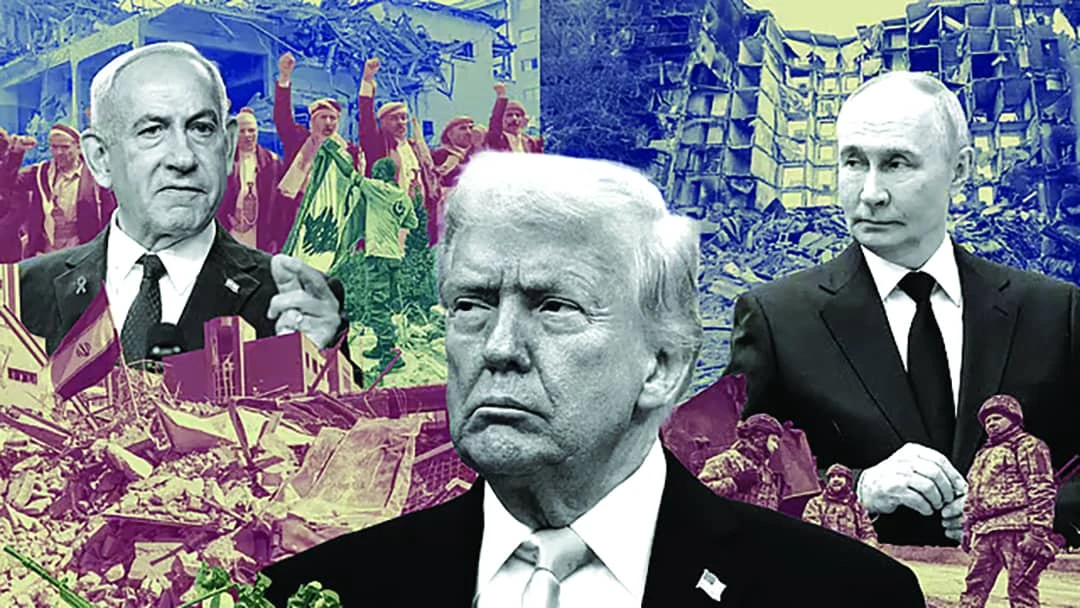
International affairs is a complex affair. But it is to our utter dismay that leaders are often driven by irrational behavior than rational one. A rational behavior is associated with critical thinking, while the irrational is dictated by emotions. In recent times, Putin’s attack on Ukraine and Donald Trump’s decision to invade Iran are text book examples of irrationality. By attacking Ukraine, Putin has proved himself as an emotional actor. The war against Ukraine is already in its fourth year. Rational leaders start wars only when they are certain that they will win. Donald Trump’s failure to win war against Iran is a case in point. He has not only put himself in dire situation, the entire world is now plunged into energy crisis effecting global economic duress because of the war against Iran. It is widely believed that Trump started the war at the prompting of Israeli Premier Netanyahu. This assessment proves that Trump’s decision to go to war at the behest of Netanyahu is even more self-defeating. Two cases prove Trump’s irrationality clearly. The conflict was supposed to be between Israel and Iran. Iran posed no existential threat to America. By engaging America into the war, Israel has easefully retracted itself from the Iranian theater, and is now free to conduct air and ground actions in Lebanon and Palestine. On the other hand, Donald Trump has been perforce dragged into the conflict with Iran. His own army generals have opposed his wishful plan to invade Iran on ground. By starting the war twice in the middle of negotiations with Iran, once in May 2025 and then in April 2026, Trump has demonstrated his non-rational behavior.
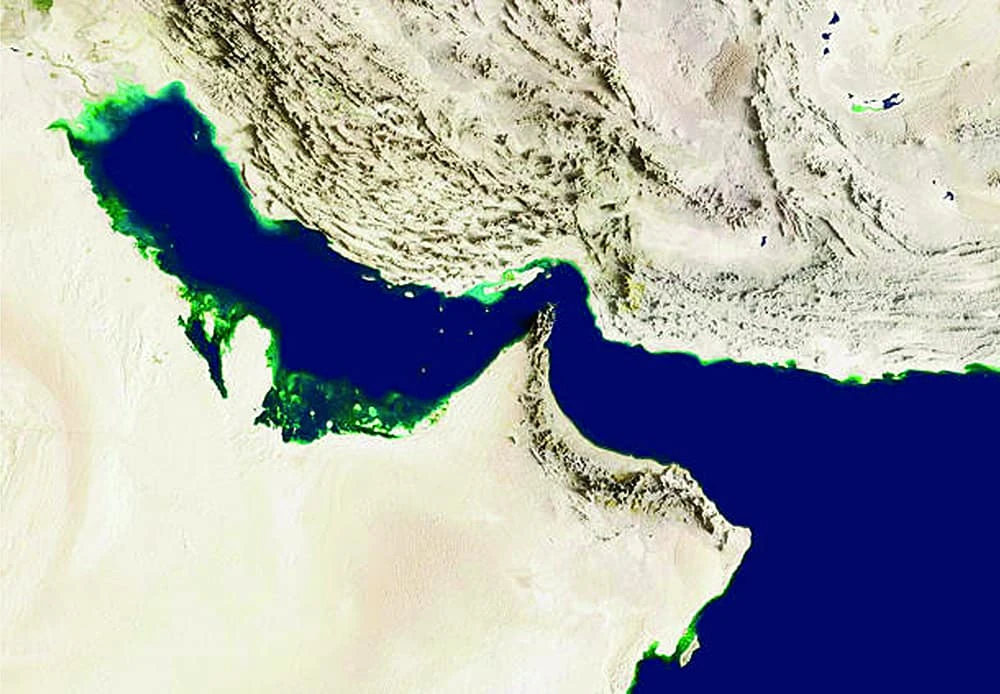
On the other hand, Iran has acted rationally. In this circumstance, the only morally acceptable reason for Iran to go to war is self-defense. Even Gulf states have demonstrated their rationality. They have not retaliated despite facing missile attacks from Iran who claim such attacks are meant against the American military units stationed in the Gulf countries, and pose a potential threat to Iran. The countries have only intercepted the incoming missiles in self-defense but not shot ones from their side into Iran. Had they done so, the war would have escalated into a regional conflagration. The regional leaders have understood the significance of acting as rational actors once they have seen how the consequence of a war of conquest is transformed into a realization of how not to fight an Economic War. This transformation of converting oneself from irrational to rational depends on a number of factors.
Since Trump started the war, he cannot permit himself to be seen as a loser while the peace deal is being struck. On the other hand, Iran is in a slightly favorable position, and cannot act weakly knowing fully well that despite so many top leaders killed, the regime is still there surviving though with severely degraded military and economic power. Just as there is economic interdependence if the global economy is to run efficiently, so there should be information interdependence, if the state-actors are to fill in the gap of trust-deficit between them.
Diplomacy in the midst of a war is the most difficult profession. “War is an instrument of politics”, so said Carl Von Clausewitz, the German military-philosopher about two centuries back. The statement still holds truth. What he further elaborated to make his point is that ‘if war begins, it must end also’. It is to end the war that demands rational behavior from the warring parties.
So far, Pakistan has played a pivotal role in filling that gap because the country has been chosen to act as a mediator. At the center of all this is the man whom President Trump has eulogized as “my favorite Field Marshal”. Throughout Pakistan’s crisis in recent times, Field Marshal Asim Munir has shown unflinching loyalty to President Trump. President Trump has also proved that the person who is loyal to him, he is also loyal to that person. Under the present melting circumstances, it is to be seen how diplomacy plays out.
The idea of ticking off the present Iranian regime would be an irrational concept because that would supplant the lull period by further escalation that ceasefire has temporarily established. Iran would act rationally if its nuclear enrichment program is tamed for peaceful purposes. Gulf countries would demonstrate rationality if instead of blaming Iran for violating the sovereignty of their airspace convince her to keep the Strait of Hormuz free for international maritime passage. America would be rational if it removes the naval blockade to allow the Iranian ships to pass through beyond the Strait of Hormuz. The United Nations should venture into passing of rational resolution to stop Netanyahu from killing innocent civilians in Lebanon and Palestine. Above all, America still as the lone superpower must demonstrate its “grand strategic rationality” by involving itself in a deliberative decision-making process to fill in the gap of trust deficit prevalent amongst so many actors.

None of this is to say that it is an easy task. But America as the global leader must make its choices credible. It should not take sides with any country at this critical juncture when the world is passing through such difficult times. There are times when a great power needs to be neutral. It is this moment of history when another US President from another period of a bygone history, Woodrow Wilson whose formulation of world peace is so much in need of asking.
আরও পড়ুন -