THE POWER OF AIR FORCE
📝
🕐 2025-12-22 02:57:00

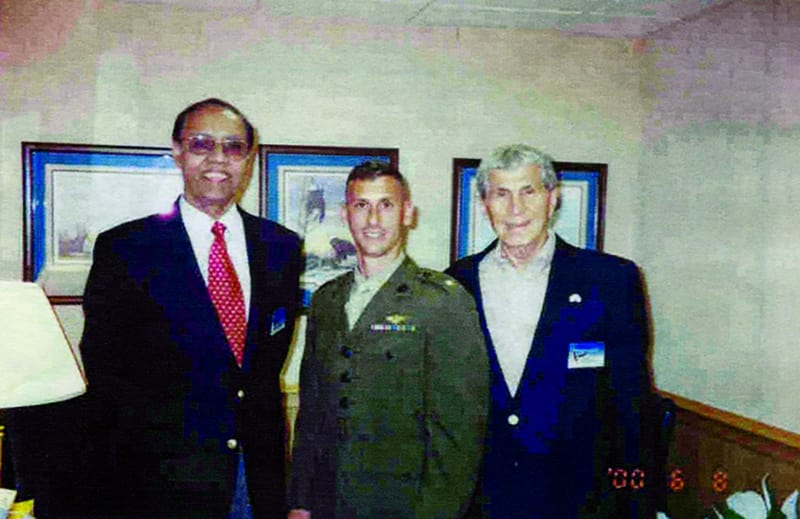
Air Vice Marshal Mahmud Hussain (Retd)
is served as High Commissioner of Bangladesh to Brunei Darussalam from November 2016 to September 2020 and served as the Chairman, Civil Aviation Authority of Bangladesh (CAAB). Presently, he is working as the Distinguished Expert at Aviation and Aerospace University, Bangladesh (AAUB).

No other form of warfare has shaken the world so much as the
air war since the beginning of the last century. The representative feature of
air war was the power it signaled to the enemy. Even before the First World
War, its application was conceived as a military act of political
instrument. The Italians were the first
to use air power in Italo-Turkish War in 1911-1912 against the Ottoman forces.
The primary job was reconnaissance and bombing. It marked the beginning of
aviation in warfare. War was, no longer, going to be the same in future.
Aircraft had come to declare itself as the superior form of politico-military
instrument in defending a nation.
More importantly, aircraft did not undermine the age-old
belief in the principles of war rather it defended them more strongly by making
use of this scientific invention in the third dimension of space with the
properties of momentum of physics. It attained the perfect ideal condition of
Clausewitz’s emphasis on occupying the ‘high ground’ and Napoleon’s push for
‘speed’. Height and speed both gave aircraft advantages that surface forces
feared most. The operators of aircraft called ‘pilots’ became the most
intelligent soldier for the enemy to fight with. Chivalry and knighthood were
bestowed upon the soldier who challenged the enemy either on the ground from
the air or in the sky.
World War I saw the widespread use of aircraft in aerial combat, interdiction, battlefield support and even strategic bombing. Generals and admirals were quick to seize the opportunity when they made aircraft a dogged part of their inventory. So, the birth of air force as an independent service faced challenges from army and navy. In 1912, Royal Flying Corps (RFC) was formed as the British Army’s air arm. Royal Navy also had an air arm called Royal Naval Air Service (RNAS). It took quite an uphill task for the British to create a unified single independent air force. Royal Air Force (RAF) was born on 01 April 1918 by the merger of RFC and RNAS. RAF is the world's first national air force.

The story of the genesis of the United States Air Force
(USAF) is even more absorbing. The root of USAF was Army Air Corps formed on 2
July 1926. The Air Corps became United States Army Air Force (USAAF) on 20 June
1941. It was not until 18 September 1947
that USAF was established as an independent force and an equal partner to US
Army and US Navy. Henry Hap Arnold was the first Chief of Air Staff of USAF. Of
the nine men who have held the rank of five star General and admiral in the US
military, General Arnold is one of them, and the only one from the USAF. Today,
he holds the same stature as a military strategist and leader as George C.
Marshall, Douglas MacArthur, Dwight D. Eisenhower, Omar Bradley from the US
Army and Fleet Admirals William Leahy, Ernest King, Chester Nimitz and William
Halsey from the US Navy.
The story of USAF and RAF show the survival battles that the soldier-turned-airman had to wage to claim his unique position in the structure of military hierarchy. The idea to become independent was prevalent among airmen who were born in the army. The redeeming feature of their avowal was hoisted upon the power of aircraft. It had the ‘trans-national reach’, and was not controlled by the friction of land and water. The sky provided it with an omni-directional motion. The cult of the offensive suited most the air force whose operational efficiency extended beyond the tactical urgency of war.

Two things made the power of air force formidable and
non-negotiable. Air Force was capable of carrying the war into enemy’s
heartland. Strategic bombing became a code-word substituting for breaking the
will of enemy people. It truly vindicated Thucydides’ quote, "The strong
do what they can, and the weak suffer what they must". A nation with a weak air force will always be
at the mercy of a state with a strong air force.
The liberation war of Bangladesh clearly illustrates the
power of air force. Bangladesh Air Force (BAF) was formally launched as the Air
Wing of the Mukti Bahini on 28 September 1971. 9 Bengali pilots and 58 former
PAF personnel formed the unit under the command of Group Captain (Later Air
Vice Marshal and COAS) A. K. Khandker. It operated as a flight called “Kilo
Flight”. BAF’s initial fleet consisted of a DC-3, an Otter and an Alouette
helicopter. Its base was at Dimapur Airport in the Indian state of Nagaland.
The size of the Kilo Flight was small but it played a
crucial role in turning the tide of the war by engaging in air operations
against the Pakistani forces. It was the Bengali pilots who struck the first
air strikes against the Pakistanis on 8 October 1971. Between 4 and 16 December
1971, the Otter flew 12 and the Alouette flew 77 sorties. Its support to the ground
forces was vital to establishing lines of communication for land battles.
The Pakistan Air Force (PAF) was put out of operations by the destruction of the Tejgaon Airport just after three days of the start of the war on 3 December 1971. The PAF employed F-86 Sabres were outmatched by Indian Mig-21s in the air battles over East Pakistan. The holistic use of fighters, transports and helicopters by Indian Air Force (IAF) and Kilo Flight effectively lowered the morale of Pakistan forces, and on 16 December 1971, Pakistan army surrendered with 90,000 soldiers realizing fully well that any further fighting without the air support was meaningless.

Attacks on targets like Chittagong port and Narayanganj fuel
dumps demonstrated the morale and spirit of BAF in innovation and operational
capabilities. The successful air operations by BAF in 1971 left a message for
the country that Bangladesh needed a strong air force for the air defence of
her skies after independence.
Historians often euphemistically attribute the survival of
Great Britain to Royal Air Force (RAF) in World War II. The RAF and the Fleet
Air Arm of the Royal Navy defended Great Britain against massive attacks by
Germany's air force, the Luftwaffe. It was the first major military campaign
fought entirely by air forces. Had Germany won in the air, it would have
launched Operation Sea Lion to invade Britain, and the course of World War II
would have been different with its impact on the history of the world. There
were occasions when an RAF pilot was shot down, his aircraft fell into the
English Channel but he survived, and then swam ashore and was ready for the
second mission in the air against the Germans.
Winston Churchill summed up the gratitude of the Britons
about the battle with the words, "Never in the field of human conflict was
so much owed by so many to so few". Pilots who fought in the battle have
been known as “The Few”.
On May 29, 1948, the Israeli Air Force (IAF) launched its
entire fleet of four fighter aircraft in a desperate attempt to halt an
Egyptian advance on Tel Aviv. This was the first use of Israeli fighter planes
in combat. Louis Lenart leading the fighter mission, and three others with less
than two hours’ experience in fighters, attacked an Egyptian force of 10,000
troops supported by tanks and artillery, only 16 miles away to the south of Tel
Aviv. The Israeli’s untested aircraft Mezec, armed with only 20-mm cannons and
70-kg bombs, made history. One of the Israeli aircraft was severely damaged and
the other crashed. But they halted Egyptian advance, and made them turn back.
Thus, the power of IAF permanently sealed the fate of the Arabs to claim
Palestine their homeland.
The Iran–Israel war, also known as the Twelve-Day War (13
June – 24 June 2025), is the reality of taking the initiative away from the
enemy by applying air force in the very first instant of conflict. Israel was
able to exercise a high degree of air superiority over Iran. Israel used more
than 200 manned aircraft in its initial attack, with its air force reportedly
suffering zero casualties. Within 48 hours of starting the conflict, Israel
gained control of the skies above Tehran, and for the rest of the conflict used
its air force at will over any part of Iran.
Israel has always been saved by its Air Force from its
enemies. No Arab country in the Middle East comes close to IAF’s potential to
instill psychological fears in the hearts of the enemy’s population and armies.
IAF has never allowed neighboring Arab states to exercise initiatives and
dictate terms to its Air Force, thereby playing pivotal role in accomplishing
the political objective of ensuring perpetual security of its nationhood.
In recent times, the success demonstrated by Pakistan Air
Force (PAF) against the Indian Air Force is a transformation of reality into a
symbolic record. PAF has shown that air force is a qualitative element of both
political and military power and if used, as a system of warfighting systems,
is capable of calling the shots to objective gains, no matter how small it is. On
7 May 2025, India and Pakistan engaged in one of the largest air battles in
history. There were 114 aircraft involved, 72 of Indian Air Force and 42 of
PAF. The battle lasted for over an hour. PAF shot down 6 Indian aircraft
(unconfirmed) including 3 newly procured French Rafales. The power of PAF has
today transmuted the national pride of the Pakistanis. It is not a conjecture
but a reality based on cold, hard facts taking shape face to face the
formidable might of the Indian Air Force, the fourth largest air force of the
world.
The power of air force is now an established logic. A strong
air force is the first guarantor of credible deterrence. Its military utility
is not merely in the concept of launching independent air operations but also
to provide protection to surface forces. US Navy has the world’s third largest
air force. It has 11 active aircraft carriers and 9 “helicopter” careers with
over 4,000 operational aircraft including about 800 fighters and more or less
equal number of helicopters.
When Alfred Thayer Mahan wrote his book The Influence of Sea
Power Upon History, the element of naval air force had not arrived on the scene
of history, and navy was considered a tactical force to be engaged in
battles. With aircraft carriers, Navy
has turned into a strategic asset for the great powers to be engaged for
political goals. The movement of aircraft carriers from one sea to the other is
a signal to carrying out diplomacy by military means.
Air Force is the first priority in the order of application
of force. This principle has now turned into an a priori logic. Air Force is
the precursor to air superiority meaning the sky above own surface forces is
protected from enemy air attacks. Air force’s task is to make sure that army
and navy is preserved today, so that the can fight winning battles tomorrow.
The dissipation of energy by the Air Force in its initial success is what
renders significance to the accumulation of momentum by the ground troops in
the subsequent phases of conflict. The core of any military operation in the
first and most crucial phase of conflict is the employment strategy of its
fighter aircraft.
The idea of limited wars is posited upon achieving limited
objectives. Future wars will be mostly limited in nature. Under the pressures
of present civilizational norms encompassing international relations, no state
will be willing to conquer and subjugate the land of another state. If the magnitude of force is the determinant
of coercing adversary’s political shenanigans, then no military power comes
close to Air Force in attainting that moral realism.
The state has rightly appointed Bangladesh Air Force (BAF)
as the overall responsible agency for national Air Defence. BAF is primarily responsible for protecting
the sovereignty of Bangladesh airspace, and as well providing air support to
Bangladesh Army and Bangladesh Navy. The Ministry of Defence (MOD) Directive
1975 clearly states BAF’s role as “Safeguard/Defend the Airspace of
Bangladesh”. During Myanmar Crisis, Cox’s Bazar Radar detected 19 airspace
violations timely and accurately. Live Air Defence Alerts (ADA) were carried
out by BAF fighters that deterred Myanmar Military from making any hostile
ingress into Bangladesh territory. Air Defence surveillance of BAF did not fail
in time of national call.
International Civil Aviation Organization (ICAO) in its
manual on Security (Annex 17) titled Safeguarding International Civil Aviation
Against Acts of Unlawful Interference empowers the state with the right to
defend own airspace if violated by any unauthorized entry. It is the BAF upon
which that right is vested on behalf of the state. On the basis of this right,
the Bangladesh government gave approval to the mapping of Air Defence
Identification Zone (ADIZ) on 20 November 2017. ADIZ has been activated with
effect from 01 February 2018 upon ICAO’s provisional approval. MOD’s statement
on Defence Policy of Bangladesh, 2018, page 9, states, “Bangladesh Air Force
shall be able to defend the total Airspace of Bangladesh”.
Present day air forces must include three broad principles
in developing its organizational structure. The essential philosophical
approach to their building blocks must be pragmatic and progressive. These principles are: hierarchical,
professional and scientific.
The Chief of the Air Staff (COAS) is the Air Defence
Commander (ADC). As ADC, his strategic task of integrating all resources and
imperatives is immensely challenging. Bangladesh does need a comprehensive Air
Defence Strategy incorporating air force, army, navy and civil (passive)
defence. The elements should clearly know what their objectives are, what their
plan of actions should be, and how they should make their resources available.
The strategy process should be an iterative one meaning army, navy and passive
defence source must engage with air force on regular basis under COAS’s
guidelines. Unless this hierarchical principle is made sacrosanct, Air Defence
Management based on the concept of “Total Airspace” will never be achieved.
The professional excellence of air force is substantiated by
its continuous professional training and joint exercises with its sister
services. Since BAF’s role is to provide air support to army and navy, and as
we have stated that its effective use in the air battles keeps the fighting
momentum of the surface forces on reserve, such presumption requires constant
sharpening of integrated operational planning of supporting forces through
joint exercises.
The last but not the least, the principle of scientific is
least understood. Air Force is not merely a military instrument of power. It is
also a scientific instrument of power. Any nation whose air force is strong is
also strong in science and technology. This makes it imperative for BAF to
recruit the best boys and girls of the society. Modern wars are fought with
brain, not so much with brawn. The advancement in the field of aircraft
technology, radar coverage, unmanned systems, network-centric warfare, space
and cyber domains, weapons’ depth and diversity (just see the diversity of
drones) and infrastructural resilience, should be a matter of deep reflection
for the air force leaders and military strategists. BAF should not merely build
a fighting culture but also a scientific culture. Nothing matters more for BAF
than to factor human equation in its bid to strengthen its power. Aviation and
Aerospace University, Bangladesh (AAUB) will be an ideal institution for honing
the scientific, engineering, operational and aesthetic minds of BAF. Officers
should be made to traverse in and out between academic and professional life on
routinely basis to keep their intellect sharp and inquisitive.
Considering the geo-political realities and physical
features for Bangladesh as well as scientific race to the swift, Bangladesh
needs a strong air force. There is no alternative to it.






More News From This Category