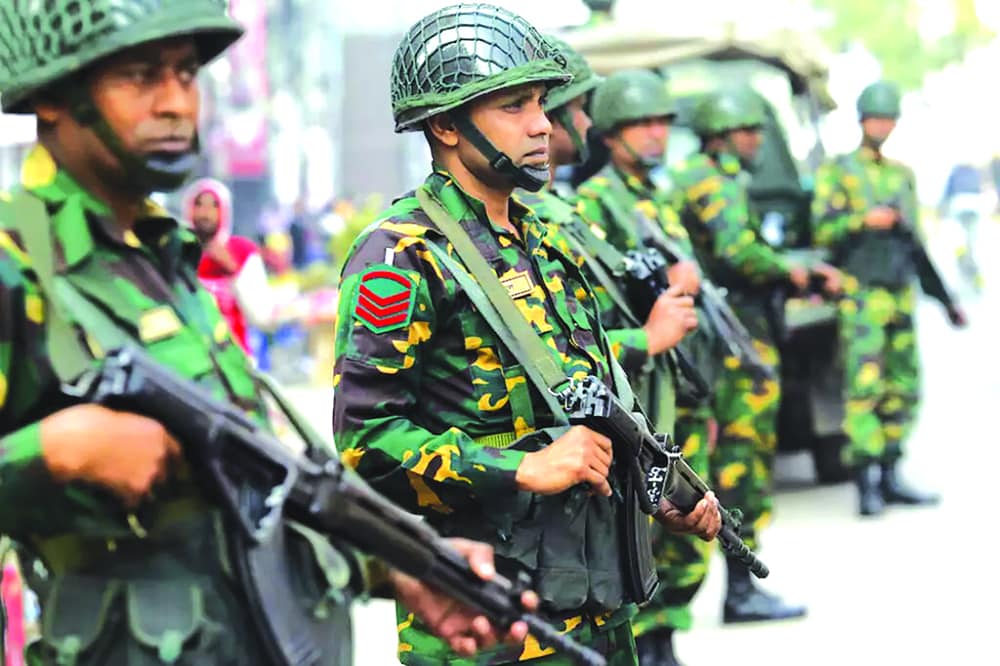
The Arakan Army in Rakhine: Present Realities and Future Trajectories
📝
🕐 2025-12-21 17:51:42

Major General (Retd) Dr. Md. Nayeem Ashfaque Chowdhury
is the Chief Executive Officer, Prime Bank Foundation.

Bangladesh at a Strategic Crossroads: The Arakan Army Factor
Bangladesh stands at a critical juncture, confronting a complex array of challenges—both internal and external—particularly from its immediate neighborhood. Among these, the enduring and multifaceted threats emanating from Myanmar, especially the Rakhine region, remain among the most pressing.
Escalating Instability in Myanmar
The situation in Myanmar is marked by escalating instability. The erosion of control by the internationally recognized state actor—the Tatmadaw—and the rise of non-state entities such as Ethnic Armed Organizations (EAOs) and the People’s Defense Forces (PDF) have severely constrained the scope of Track I diplomacy. Myanmar’s unchecked narco-terrorism, the Arakan Army’s (AA) and United League of Arakan’s (ULA) lack of professional statecraft, and the overwhelming burden of hosting 1.3 million Rohingya refugees have deeply impacted Bangladesh’s socioeconomic, ecological, and security fabric. The looming influx of remaining Rohingyas from Rakhine, coupled with the absence of trust between the AA, ethnic Rakhine, and Rohingya communities, casts serious doubt on the prospects for sustainable repatriation. These are but the tip of the iceberg.
The Arakan Prosperity Plan
In late 2024, the United League of Arakan (ULA) and its armed wing, the Arakan Army, unveiled the “Arakan Prosperity Plan” as part of their broader governance and development vision for Rakhine State. Publicly articulated on December 29, 2024, the plan outlined six pillars: stance, economy, military, nationalism, peace, and politics. Spearheaded by Major General Twan Mrat Naing, the AA’s commander, the plan is framed within the “Way of Rakhita” and the long-term Arakan Dream 2030 vision.
From Insurgency to Governance
The evolving role of the Arakan Army sits at the intersection of ethnic assertion, regional geopolitics, and contested statehood. From a marginal insurgent group, the AA has transformed into a dominant military and administrative force—reshaping strategic calculations for China, India, Bangladesh, and the broader international community. The
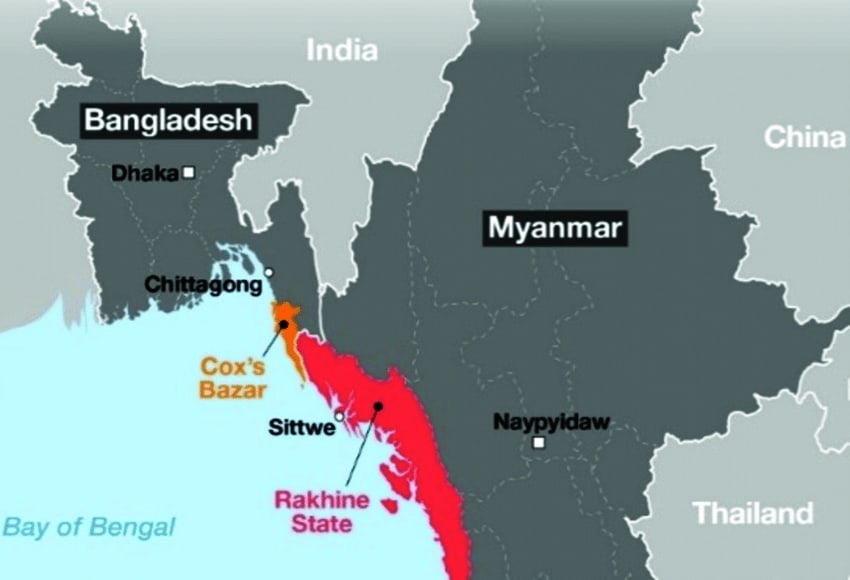
AA now controls 14 of 17 townships, including Maungdaw, Buthidaung, and Paletwa—effectively securing the entire border with Bangladesh and India.
Reports indicate the planting of landmines along the Bangladesh-Myanmar frontier, resulting in casualties, including the tragic death of a Border Guard Bangladesh (BGB) soldier on October 25. Skirmishes between the AA and Rohingya armed factions—ARSA, RSO, and ARA—have intensified near Naikhongchhari and Teknaf. The AA has not offered clear guarantees for Rohingya rights, and many Rohingya remain wary of its ethno-nationalist agenda. Allegations of abductions of Bangladeshi fishermen by AA fighters have further heightened anxiety in border communities.
Human Rights Concerns
The AA stands accused of forced labor, arbitrary arrests, and religious persecution in Rohingya-majority areas. Families are coerced into night patrols or fined, and mosques have reportedly been demolished—raising grave concerns about cultural erasure. Meanwhile, the AA is advancing toward Sittwe, the state capital, and Kyaukphyu, home to China’s strategic deep-sea port and energy corridor. In Sittwe, civilians face soaring prices, acute food shortages, and lawlessness. The city is encircled, accessible only by sea or air.
Strategic Advances and Constraints
The fall of the Western Regional Military Command has significantly weakened the Tatmadaw’s grip on Rakhine. While hostilities persist, signs of tactical restraint suggest the AA may be avoiding overstretch. It has captured all three entry routes from mainland Myanmar into Rakhine and is now advancing eastward into Bago and Ayeyarwady—regions hosting the bulk of Myanmar’s military industries.
Relations between the Arakan Army and the National Unity Government (NUG) remain tenuous. Although both oppose the junta, the AA has not endorsed the NUG’s federal vision, nor has it forgotten Aung San Suu Kyi’s hostility toward the group during her tenure. Instead, the AA may pursue a trajectory similar to Kosovo or Somaliland—securing de facto autonomy first, followed by incremental international recognition.
Shifting Ethnic Dynamics
The AA’s ascendancy has shifted the balance among ethnic armed organizations. Its model of parallel governance and military consolidation could either inspire other groups or destabilize them, reshaping the broader landscape of Myanmar’s ethnic conflict.
A critical dynamic in Myanmar is that most armed groups wield greater decision-making authority than their political wings—including the AA. The exception remains the National League for Democracy (NLD). This imbalance is mirrored in the relationship between the Tatmadaw and the civilian government, where the military retains predominant influence. Such realities must be carefully considered when engaging with both state and non-state actors in Myanmar.

Arakan Army Seized 14 out 17 Rakhine Townships
Geostrategic Implications
Beijing’s strategic interests in Rakhine revolve around Kyaukphyu and the China-Myanmar Economic Corridor (CMEC). Thus far, the AA has refrained from disrupting Chinese investments, signaling pragmatism. Yet instability in Kyaukphyu could jeopardize Beijing’s efforts to mitigate the “Malacca Dilemma.”
India has deepened informal ties with Rakhine-based actors, while China continues to exert overarching influence—balancing relations with both the Tatmadaw and insurgent groups. The AA’s control over Paletwa directly affects India’s Kaladan Multi-Modal Transit Transport Project (KMTTP), a flagship initiative for Northeast connectivity. Although the AA has not opposed Indian infrastructure, New Delhi remains cautious, maintaining a delicate balance between the junta and ethnic armed organizations.
ASEAN has reiterated its commitment to the Five-Point Consensus (5PC), voicing deep frustration over the lack of progress. It has refused to endorse the junta’s planned elections and continues to call for an immediate ceasefire and inclusive political dialogue. Western governments remain wary of legitimizing secessionist movements. However, the AA’s state-building efforts may quietly attract interest—particularly if it demonstrates inclusive governance and respect for human rights.
The United States is likely to prioritize three strategic objectives: ensuring regional stability, countering China’s expanding footprint, and combating transnational crime.
The AA’s rise in Rakhine is also reshaping Bangladesh’s security environment. Its popularity among Rakhine Buddhists contrasts sharply with hostility toward the Rohingya, generating new refugee flows and border instability. With the AA now
controlling the entire 270-kilometer frontier with Bangladesh, Dhaka faces mounting security dilemmas. The presence of nearly a million Rohingya refugees and the risk of spillover violence make stability in Rakhine a strategic imperative. Reports of arms smuggling from Rakhine into the Chittagong Hill Tracts—directly or via Mizoram—and rampant drug trafficking through porous borders further compound the threat. For Bangladesh, this translates into heightened risks of cross-border tensions, maritime insecurity, and complications in Rohingya repatriation.
Projected Security Outlook in Rakhine
The Tatmadaw is unlikely to leave any stone unturned in its effort to reassert control over Rakhine and reinforce Myanmar’s unitary state structure. Achieving this objective will almost certainly require close strategic alignment with China—a partnership that could materialize swiftly given existing geopolitical ties. Reports suggest Beijing has already begun pressuring the Arakan Army (AA) to conform to its terms. Once the Tatmadaw secures Chinese backing and consolidates gains in other parts of Myanmar, a military offensive in Rakhine appears likely.
In the meantime, the Tatmadaw is expected to strengthen its strategic footholds, focusing on key urban centers such as Sittwe and Kyaukphyu, as well as critical military-industrial assets in the Bago and Magway regions. This consolidation phase may serve as a launchpad for broader operations.
For Bangladesh, vigilance is essential. Whether the AA or the Tatmadaw ultimately prevails, there remains a credible risk of further displacement of Rohingya populations—potentially triggering renewed cross-border influxes.
The AA itself faces mounting constraints. Encircled by hostile forces—the Chin National Front (CNF) to the north, the Tatmadaw to the south and southeast, the People’s Defense Forces (PDF) to the south, and the Bay of Bengal to the west—the group is severely deprived of logistical support. Economic activity in Rakhine has stagnated, exacerbating resource scarcity. Historically, the Rohingya provided much of the agricultural labor force in northern Rakhine, particularly in rice cultivation, fisheries, and seasonal farm work. Their absence has left farms struggling with acute labor shortages, especially during peak seasons. Rakhine Buddhists, who traditionally owned land but relied on Rohingya labor, now face declining productivity.
To sustain its growing logistical demands—expected to rise exponentially—the AA has reportedly become increasingly reliant on illicit networks, including arms smuggling,
narcotics, and human trafficking. This reliance not only undermines local stability but also poses serious transnational security risks for the wider region.
Strategic Recommendations for Dhaka
Bangladesh must adopt a multi-track diplomatic approach—Track I, Track 1.5, and Track II—engaging all stakeholders in Myanmar as well as the wider international community. Naturalization of Rohingyas in Bangladesh is not at all an option which Rohingyas also strongly believe. From a security perspective, several measures stand out as imperative:
Military Deterrence
Bangladesh should reinforce its military posture through:
Strengthened military diplomacy with regional and global partners
Regular operational audits to identify vulnerabilities
Procurement of appropriate arms and munitions
Enhanced training and preparedness of forces
Exploration of strategic alliances with friendly nations to bolster deterrence
Border Security
Securing the frontier with Myanmar is critical. Recommended steps include:
Comprehensive border sealing through fencing and construction of border roads
Intensified deployment of Border Guard Bangladesh (BGB) units
Expanded intelligence operations to detect and neutralize threats
Rohingya Engagement
The Rohingya refugee population must be integrated into community-based initiatives that promote stability. This involves:
Engaging camp residents and their leadership in security awareness programs
Building motivation and leadership capacity to reduce susceptibility to radicalization
Encouraging constructive participation in local resilience efforts
Local Mobilization
Bangladesh should harness the strength of its local communities in combating narco-terrorism and transnational crime. This requires:
Coordinated action against arms smuggling, drug trafficking, and human trafficking
Active involvement of local administration, elected representatives, media, religious leaders, and civil society
Sustained public awareness campaigns to build resilience against illicit networks
Conclusion
The Arakan Army’s trajectory—from insurgency to de facto governance—has transformed Rakhine into a crucible of ethnic assertion, contested statehood, and regional geopolitics. For Bangladesh, the stakes are existential: stability in Rakhine is not merely a neighbor’s concern but a strategic imperative. Navigating this volatile landscape will require vigilance, pragmatism, and a recalibration of regional diplomacy.







More News From This Category