For greater and mutually beneficial Korea-Bangladesh relations
📝
🕐 2025-12-21 17:20:10


SONG Kyung-jin
is senior fellow at Asiatic Research Institute at Korea University

The Asia-Pacific Economic Cooperation (APEC) Leaders’ Meeting was held on Oct.31-Nov. 1 in Gyeongju amid the intensifying U.S.-China strategic rivalry and growing geopolitical and geoeconomic uncertainties. APEC was already a success in that it brought Messrs Donald Trump and Xi Jinping together to meet in Busan on Oct. 30 and agreed on certain measures. However, the measures were limited to stopgap measures.
Besides, the decision of the Supreme Court of the United States on the U.S. tariffs, expected in December or January 2026, will not change course, contrary to the wishes of many, because some U.S. laws provide leeway. For instance, Section 232 of the Trade Expansion Act of 1962 allows the U.S. president to impose tariffs on individual goods imports. Hence, more uncertainties are likely to continue into the next year.

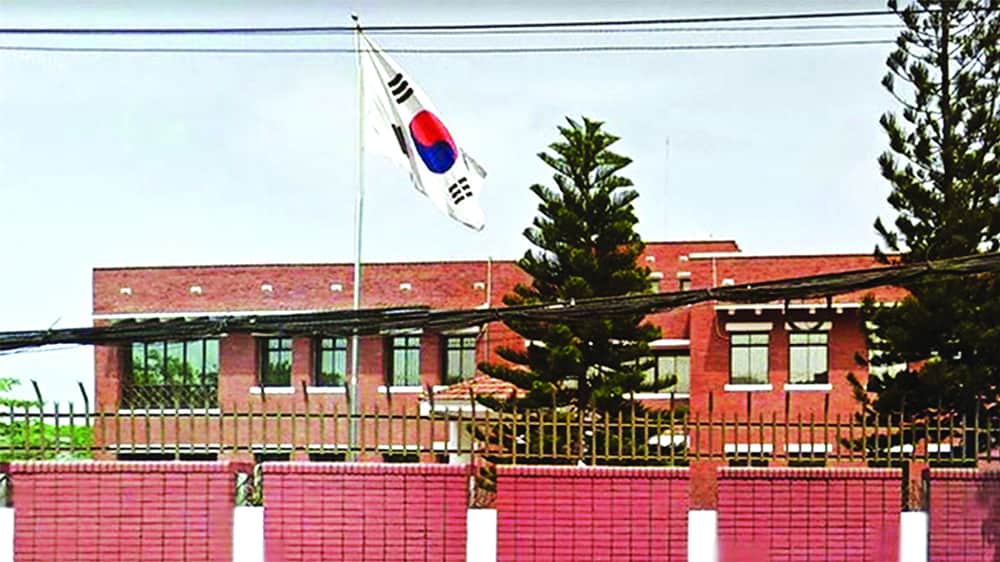
Against this backdrop, my recent visit to Bangladesh to attend a seminar organized by the Korean Embassy in Dhaka reaffirmed for me the urgent need to further strengthen Korea–Bangladesh cooperation in more diversified ways.
Korea and Bangladesh have enjoyed a special economic partnership since the 1980s. Korea is one of Bangladesh’s largest investors, with Korean garment and apparel companies actively operating in the market. Today, Bangladesh is the world’s 35th-largest economy, but it was once among the poorest countries in the world and was frequently devastated by annual cyclones and floods. Despite these difficult circumstances, some entrepreneurs recognized its potential and entered the market early on, including YOUNGONE and Yupoong, one of the world’s leading sports cap manufacturers. I admire and appreciate the vision of such entrepreneurs.
Nonetheless, the ongoing political instability since last year and the 20 percent reciprocal tariff imposed by the United States are likely to adversely affect the investment environment in Bangladesh. But my conversations with several Korean investors there explained to me that Bangladesh remains an attractive and competitive investment destination, thanks to its favorable investment conditions and diligent workforce, despite chronic challenges such as bureaucratic red tape, inefficiencies, and insufficient infrastructure.
Some of these chronic problems could be addressed and improved through Korea–Bangladesh development cooperation. As of 2024, Korea’s total development assistance to Bangladesh amounted to $107.6 million, making Bangladesh Korea’s sixth-largest development partner. The two countries have collaborated on human capital development, capacity building in both the public and private sectors, water management, ICT, public health, and many other areas that are closely linked to mitigating these longstanding challenges. I sense that the time is ripe for the two countries to review and streamline the areas of cooperation toward a more result-oriented partnership.
The long years of economic vision and cooperation led the two countries to finally launch a series of negotiations in November 2024 toward concluding a bilateral comprehensive economic partnership agreement (CEPA).
The CEPA, once concluded, will pave the way for expanding cooperation from conventional textiles to electronics, health and biotech, and AI. Another reason to expedite it is related to Bangladesh’s graduation from the Least Developed Country (LDC) category. It will be much more beneficial for Bangladesh to conclude the CEPA before its LDC graduation. Moreover, in an era of receding globalization and weakened multilateral institutions such as the World Trade Organization, bilateral and plurilateral trade agreements have gained renewed importance in advancing trade and economic integration. For this very reason, Korea should join the Comprehensive and Progressive Agreement for Trans-Pacific Partnership as soon as possible and support Bangladesh’s accession to the Regional Comprehensive Economic Partnership.
Cooperation between Korea and Bangladesh is also important in the area of maritime security. Maritime security is vital not only for Korea’s trade and economy but also for its overall security and survival. More than 90 percent of Korea’s trade, including its oil imports, passes through the Indian Ocean, one of the world’s most strategic sea lanes. This region is frequently affected by nontraditional security threats such as piracy, illegal fishing and natural disasters like tsunamis, among others.
Close cooperation to enhance maritime security capabilities is essential for addressing both conventional and nonconventional threats. As an Indian Ocean rim country, Bangladesh is a natural partner in pursuing this goal. In this context, the launch of the Korea–Bangladesh navy-to-navy staff talks in October in Dhaka represents a meaningful step toward closer cooperation in maritime security and defense production. The two countries agreed to expand high-level personnel exchanges in military education, increase joint exercises and collaborate on the modernization of the Bangladesh navy.
It is time for Korea, long regarded as a bridge between developed and developing countries, to recognize Bangladesh as a core partner in its outreach to and cooperation with the Global South. The Korea Indian Ocean Cooperation Fund is a good step in the right direction. It aims to promote economic and social cooperation with the Indian Ocean Rim countries, in consultation with the Indian Ocean Rim Association, with a special emphasis on sustainable port development and the utilization of marine resources. More such mechanisms will be most helpful.
Korea and Bangladesh are laying the groundwork for an upgraded relationship. Now, more than ever, this effort requires greater public attention and steadfast support.





More News From This Category