Fleet Financing for Startups: Leases, Purchases, or a Hybrid Strategy
📝
🕐 2025-12-21 17:13:06

Sqn Ldr Md Khirul Islam
is a Squadron Leader in the Bangladesh Air Force.

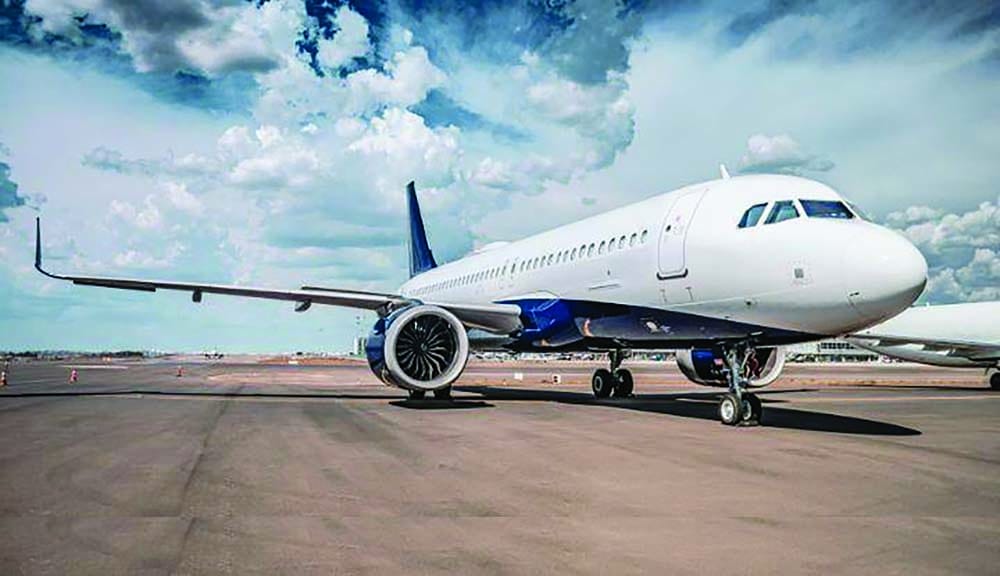
Secured Fleet acquisition is one of the most perilous strategic decisions for any airline especially for a startup. The choice between leasing and purchasing aircraft directly impacts financial flexibility, operational control, and long-term competitiveness. This article will provide an in-depth analysis of both methods, examining the advantages, disadvantages, and practical considerations relevant to a new airline for secured entering the market.
Approach by Startup Airlines
1. If it is approached by a startup airline to me, an aviation business analyst and consultant, by a startup airline to provide insight into his secured fleet acquisition strategy. Where the approaching company, startup airline is specially attracted the merits and drawbacks of aircraft leasing as compared to outright purchasing. In light of the above the treasured opinion is coined in the treatise.
Revealing the Treasured Insight to the Startup Airline Company
2. As an aviation analyst, my insights will be through the discussion of aircraft leasing and outright purchasing of aircraft to met-up the requirements of startup airline with brief elaboration of merits and drawbacks of above underlined topic.
3. Aircraft Leasing. To lend or borrow the aircraft for operation (fleet) commercial purpose for special period on the basis of contract for the consideration of money (agreed currency) whether only aircraft or along with staffs, crews, maintenance staffs (technicians) etc. either wet lending/ borrowing or dry lending/borrowing is termed as aircraft leasing.
4. In literary words, when an airline or operator pays to use an aircraft from an owner (lessor) for a set period, avoiding large upfront purchase costs, with options of Dry Lease (just the plane) or Wet Lease (plane + crew + maintenance), offering flexibility and access to new fleets without full ownership burdens, making it popular for escalating capacity or managing cash flow, then its called Aircraft leasing.
a. Merits of Aircraft Leasing. For the affirmative approach to the aircraft leasing for startup aviation company following merits of the title may ponder:
(1) Low upfront capital cost
(2) Quick Access to aircraft
(3) Quick operability of fleet
(4) Fleet Flexibility
(5) Less liability in business in Aviation
(6) Less risk in business
(7) Quick profitability and better flow of cash
(8) Quick strategic implication by lessee company
(9) Flexibility to end the aviation business.
b. Drawbacks of Aircraft Leasing. For the affirmative approach to the aircraft leasing for startup aviation company following merits of the title may ponder:
(1) Higher Long-Term expense through rent which may exceeds aircraft’s purchase price
(2) Limited Customization of fleet i.e. aircraft configuration, interior design or branding modification
(3) Dependency on Lessor
(4) Contractual restrictions by articles on operational freedom, usage limitations e.g., flight hours, cycles maintenance standards etc.
(5) Loss of Capital than Purchasing is in long range.
(6) No ownership in range.
(7) Less independence in usage and modification.
(8) Depreciation benefit-less business.
(9) High payment in contractual period.
(10) Obligation of business in time limitation.
(11) Limitation of business expansion for less investment in leasing.
(12) High Tax of income in business through the leasing aircraft.
5. Outright Purchasing of Aircraft. The outright purchasing aircraft in cash or loan or taking finance from other ways is the way to enter into the aviation business by the startup airline. It has merits and drawbacks; are discussed below:
a. Merits of Outright Purchasing
(1) Achievement Full Assets Ownership
(2) Strategic Control is ensured over aircraft usage, configuration and long-term deployment
(3) Lower Lifetime Cost after loan repayment
(4) Stability and Independence i.e. eliminating dependency on lessor and long-term operational planning predictability
(5) Potential Asset Value retained and collateral useability for future financing
(6) Long Term Assets in Aviation business.
(7) Benefits of depreciation in aviation business.
(8) Operational Liberty in aviation business.
(9) Liberty of customization in all aspects like aircraft configuration, interior design or branding modification and technical specification.
b. Drawbacks of Outright Purchasing
(1) High Initial Capital Requirement
(2) Financial Burden
(3) Exposure to Depreciation and Residual (market) Risk
(4) Reduced flexibility for fleet change
(5) More Liability in balance sheets.
(6) Lew fleet flexibility.
(7) Have to take more risk on damage.
(8) Lowest drawback in short range loss case is less profitability but in worst case the cause of bankruptcy.
(9) Have to maintain own technical team with own cost.
(10) Need own hanger/ engineers/technical equipment’s, Ground Handling Equipment.
(11) Required owned GHA- (Ground Handling Agents).

World’s Aviation Industry Trends.
6. Over 50% of the world’s commercial aircraft fleet is now leased. Startups and low-cost carriers (LCCs) often prefer operating leases to maintain flexibility. Major legacy airlines maintain a mixed strategy, part owned, part leased, to balance cost and flexibility.
Comprehensive Analysis on Aircraft Leasing with Pros and Cons.
7. Area of comprehensive analysis on aircraft leasing with pros and cons, contains; Initial Capital Requirement, Fleet Flexibility, Operational Costs, Balance Sheet Implications, Risk Management, Strategic Implications. Details with pros and cons are discussed below:
a. Initial Capital Requirement
(1) Pros. Less initial requirement to enter easily in aviation business or market.
(2) Cons. In aircraft leasing, startup airlines have to rely on other’s finance or aircraft, they have less stability but more risk.
b. Fleet Flexibility
(1) Pors. There is fleet flexibility in aircraft leasing to operate aviation business and operation.
(2) Cons. Less Usage and modification chance.
c. Operational Cost
(1) Pors. Quick gain of profit in terms of operational cost, rapid flow of currency.
(2) Cons. More operational cost is bearded by operators in leasing in terms of owned aircraft.
d. Balance Sheet Implication
(1) Pors. Leasing improves liquidity and avoids heavy initial borrowing, maintaining stronger short-term financial flexibility.
(2) Cons. Under IFRS (International Financial Reporting Standard) 16, leases are recorded as liabilities, reducing previous accounting advantages and potentially increasing debt ratios.
e. Risk Management
(1) Pors. Comparative less risk during fleet operations for damages, crashes.
(2) Cons. Dependent on aircraft owner’s determined risk management provisions to execute. No own strong risk management procedure.
f. Strategic Implication
(1) Pors. Quick access in aviation industry is the positive strategic implication for new entrant airlines.
(2) Cons. To control the aircraft owning and in modification no strategic implication.
Secured Strategic Recommendation for the Startup Airline.
8. In the secured strategic recommendation following strategies and focus given as the startup’s position:
a. Primary Strategy. Begin operations with operating leases to minimize capital expenditure and accelerate market entry.
b. Medium-Term Strategy. As profitability stabilizes, gradually transition to a mixed fleet strategy, owning a portion of aircraft to build equity and reduce long-term costs.
c. Negotiation Focus. Secure favorable lease terms (e.g., return conditions, maintenance reserves, renewal options)
9. On the basis of the above pointy discussions i.e. pros and cons of aircraft leasing and outright aircraft purchasing by startup airline, it is preferred to a start-up airline the “Aircraft Leasing” initially for their smooth business. For a startup airline, leasing is the better initial option. It minimizes capital burden, offers operational flexibility, and allows quicker market entry. As the airline grows and gains financial strength, a mixed strategy, leasing some aircraft and purchasing others, will provide the best long-term balance.
Concluding Insights for Starup Airlines
10. In the conclusion of my article as an aviation analyst, on the basis of the above point-triggered, I would tell that for the Startup airline initially to enter in aviation business, they should consider “aircraft leasing” with. Limited capital being tied up in a contract with renown company may be for 5 to 12 years.
11. Later on, that company should shift, with some stability of fund and capital, to “partial purchasing the aircraft” to run their aviation business. If the business runs upwards, they should transmit the combination of leasing and purchasing in the next step to prosper in their business.
Rationale & Consideration for long term Implications:
12. For startup airlines at the initial stage it is best suited the aircraft leasing because, initially they don’t have own enough capital or fund and they have Less options to take risks; their primary purpose is to enter into the commerce in aviation industry. So, it will be the foundation for long-term implications.
13. In the next to initial stage i.e. intermediatory steps with the conditions of upwards of business capital the partial purchase of aircraft is required to expand their business and to sustain in competition in aviation business, so it is rationale that in the next step, the combination of aircraft leasing and partial purchasing by startup airlines can be the business icon in the long range i.e. long-term implications in aviation business.
14. So, for startup airline in first stage leasing, second stage partial purchasing and in the next long range, the combinations of both become best suited in aviation business.
Conclusion
15. Leasing offers agility, financial relief, and rapid scalability are the key advantages for a startup airline. However, outright purchasing provides ownership benefits and lower long-term costs once the airline is well-capitalized. Therefore, a balanced, phased approach starting with leases and moving toward selective ownership, provides the optimal pathway for sustainable growth and financial resilience for the startup airlines in aviation industry.







More News From This Category