

Editor & Publisher: Rabb Majumder
House # 05 (2nd Floor, 2-C), Road# 04, Banani DOHS, Dhaka - 1206
Phone: +8801715822782
Phone (Advertisement): +8801712863234
Email: rabb.h.majumder@gmail.com, info@securityworldbd.com

Bangladesh and Pakistan: Can History and Economics Build a New Relationship?

Bilateral relationships can be dictated by geography, trade,
security, or ideology. The bilateral relationship between Bangladesh and
Pakistan is one where history takes center stage above almost everything else.
That is understandable. Bangladesh did not simply separate
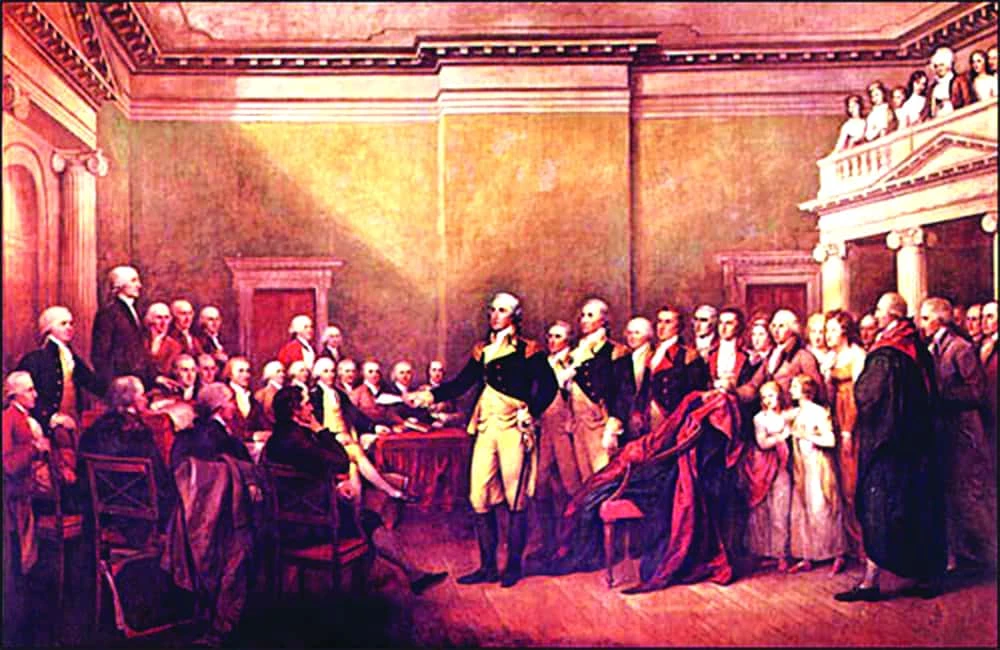
from Pakistan in 1971. It emerged after a political breakdown, military
repression, and a devastating war that left wounds embedded in Bangladesh's
national consciousness. More than half a century later, those memories remain
relevant not because Bangladeshis refuse to move forward, but because the
circumstances surrounding the country's birth are inseparable from its
identity.
Yet nations must also live in the present.
Bangladesh and Pakistan today are two sovereign countries
with a combined population of more than 430 million people and, according to
World Bank data for 2025, a combined GDP of approximately $864 billion.
Bangladesh's GDP stood at about $456 billion and Pakistan's at about $407
billion. These are no longer the economies that emerged from the rupture of
1971. (World Bank)
The question therefore is no longer whether Bangladesh
should have a relationship with Pakistan. It already does. The more important
question is what kind of relationship Bangladesh should seek—and on what terms.
The solution should find a middle ground between forgetting
the past and letting it create irreconcilable tensions. The solution should
instead be seeking economic cooperation that avoids either nation overly
depending on the other. The solution should also foster strategic engagement
that does not result in mutual alignment against a third country.
The economics behind the political rupture
The crisis between East and West Pakistan was never simply
about language, although the Language Movement was enormously important. Nor
was it simply a constitutional dispute. It was a dispute over political
representation, resource allocation, foreign-exchange earnings,
industrialization and economic power.
Economics played a key role in the separation of the
original Pakistan, so it matters for Bangladesh and Pakistan's future
relationship.
The Language Movement was a watershed event, but it alone
did not define the crisis. Constitutional disputes also did not define the
crisis by themselves. Rather, the crisis is essentially a dispute over
political representation, resource allocation, foreign-exchange income,
industrialization, and economic influence.
To support this claim, Bangladeshi economist Rehman Sobhan,
with the help of other economists, came up with what went on to be called the
“two economies” thesis. They argued that while Pakistan was officially one
country, it represented two unequal economies. Sobhan’s work shows that the gap
between the per-capita incomes of the two economies became significantly larger
between 1949 and 1970.
That economic grievance reinforced the political one.
East Pakistan contained the larger share of Pakistan's
population, generated important foreign-exchange earnings—particularly through
jute—yet Bengalis increasingly believed that national political power, public
spending, industrial investment and economic policymaking remained concentrated
in the western wing.
Then came the 1970 election. Sheikh Mujibur Rahman's Awami
League won an absolute majority in Pakistan's National Assembly and therefore
possessed the democratic mandate to form the government. Power was not
transferred. The constitutional crisis was followed by the Pakistani military
crackdown of March 1971 and eventually the Liberation War. (historical overview)
These events establish a key precedent for current economic
relations. The precedent is that when one party loses faith in the
institutional structure, economic relationships are doomed. This precedent
should serve as the foundation for the new Bangladesh-Pakistan relationship,
just as it saw the failure of the previous relationship.
The unfinished business of 1971
It is not in Bangladesh’s best interests to forget the scale
and nature of the atrocities of 1971 that remain imprinted in the national
memory. The resumption of foreign secretary consultations in April 2025 was not
the first time Bangladesh asked for Pakistan to explicitly and officially
apologize. April 2025 also saw Dhaka request financial reparations – also not
for the first time (Associated Press)
On the other hand, it is unfair and disregards nuance to say
that Pakistan has never acknowledged Bangladesh’s requests. In 1974, a
diplomatic agreement between Bangladesh, India, and Pakistan is on record that
Pakistan “condemned and deeply regretted” the alleged crimes. This prompted
Bangladesh not to proceed with the trials of 195 Pakistani prisoners of war (1974 Tripartite Agreement).
Almost thirty years later, then-President Musharraf expressed
remorse for the “excesses” of 1971 (Dawn). Unfortunately, none of this
explicitly states what Bangladesh has been asking for. Pakistan has little to
lose by confronting the past explicitly and could instead use acknowledgment to
build a stronger foundation for the emerging relationship. The key is
eliminating the ambiguity that lets tensions linger.
Bangladesh, meanwhile, need not make resolution of every
historical financial claim a precondition for every commercial transaction.
Historical reconciliation and economic normalization can proceed
simultaneously.
That suggests a two-track relationship: one track dealing
seriously with the unfinished historical questions of 1971; another building
the economic relationship of the twenty-first century.
Neither should extinguish the other.
A remarkable diplomatic thaw
The recent change in bilateral relations has already been
substantial.
In April 2025, Bangladesh and Pakistan held
foreign-secretary-level bilateral consultations in Dhaka after a 15-year
hiatus. The discussions covered trade, agriculture, education, connectivity and
other areas. (Pakistan Ministry of Foreign Affairs)
Pakistan's Deputy Prime Minister and Foreign Minister Ishaq
Dar visited Dhaka in August 2025—the first visit by a Pakistani foreign
minister in roughly 13 years. The two sides concluded six instruments,
including arrangements for a joint working group on trade, diplomatic travel,
cooperation between foreign-service academies, and cultural exchange. (Pakistan Ministry of Foreign Affairs)
Then, in October 2025, the Pakistan-Bangladesh Joint
Economic Commission met for the first time in 20 years. Its agenda was
remarkably broad: trade, investment, agriculture, shipping, aviation, banking,
IT, health, tourism, textiles, energy and climate change. Both sides also
agreed to examine a concessionary trade arrangement. (Joint Economic Commission)
Physical connectivity has followed diplomacy.
Direct shipping between Karachi and Chattogram has resumed.
On January 29, 2026, Biman Bangladesh Airlines restored direct Dhaka-Karachi
flights after a 14-year interruption. (Daily Sabah)
The political transition from the interim government to the
elected government of Prime Minister Tarique Rahman has not eliminated the
diplomatic opening. Pakistan formally invited the new Bangladeshi prime
minister to visit after he assumed office in February 2026. (Pakistan Ministry of Foreign Affairs)
All this means the debate has moved beyond symbolism.
Infrastructure for a different relationship is beginning to appear.
Trade: growing, but still remarkably small
This is where the economic paradox becomes obvious.
Two countries with more than 430 million people and nearly
$864 billion in output should be able to trade far more than they do.
Official Pakistani data show that in calendar year 2023
Pakistan exported approximately $650.6 million to Bangladesh while importing
only $63.4 million, producing total merchandise trade of roughly $714 million.
(Pakistan trade profile)
More recent reports citing Bangladeshi diplomatic officials
in Pakistan said bilateral trade had risen by around 20 percent to
approximately $1 billion by 2026. Differences between calendar-year and
fiscal-year data mean the figures should be compared carefully, but the direction
is unmistakable: commerce is expanding. (Pakistan Today)
Even $1 billion, however, represents barely one-tenth of one
percent of the two countries' combined GDP.That is not economic integration. It
is economic underdevelopment of a bilateral relationship.
Another problem is that trade is heavily tilted toward
Pakistan. Pakistan supplies Bangladesh with significant quantities of cotton
yarn, woven cotton fabrics and other textile inputs, alongside cement,
chemicals, agricultural commodities and leather. Bangladesh exports a much
smaller basket to Pakistan, including jute and jute yarn, pharmaceuticals,
textile-related products and manufactured goods. (Pakistan
trade profile)
This composition explains part of the imbalance. Pakistan's
cotton and textile-input industries complement Bangladesh's enormous
export-oriented garment sector.That complementarity should be expanded—but the
bilateral relationship will be more politically sustainable if Bangladesh also
gains substantially greater access to the Pakistani market.
From competition to value chains
Bangladesh and Pakistan tend to see themselves in economic
competition, especially in the textile industry. This perspective overlooks the
big-picture reality of value chains driving modern international trade.
Bangladesh and Pakistan have complementary strengths in the textile industry.
Bangladesh’s formidable garment manufacturing, large-scale
exporting, supply chain management, and relationships with Western retailers
can dovetail with Pakistani specializations in cotton, yarn, and upstream
textiles. Firms should seek to combine these strengths into cohesive
production.
Many potential value chain linkages between Bangladesh and
Pakistan outside of the textile space. Bangladesh offers developed
pharmaceutical industries, light manufacturing, jute, leather, ceramics, and
progressively more digital services. Pakistan offers developed agriculture,
surgical instruments, sporting goods, pharmaceutical products, information
technology, and a large consumer market. Both nations should focus on realizing
potential value chains. Creating value chains is pivotal in Bangladesh’s
progress up and away from the “least-developed” country category.
Five economic frontiers
The
first frontier is textiles and garments. Bangladesh should facilitate dependable access to Pakistani
cotton and intermediate textile products. At the same time, it should carve out
reciprocal market opportunities for garments, specialized textiles, and
higher-value domestic products.
The second is agriculture and food
security. Both countries should build agreements on rice, vegetables,
fruits, sugar, potatoes, agricultural inputs, and food-processing industries.
These agreements would smooth out periodic shortages, climate shocks, and food
price uncertainty. This would prevent either country from resorting to
expensive global spot markets during emergencies.
The third is pharmaceuticals and
healthcare. Bangladesh has come a long way in
developing generic drug manufacturing. Pakistan also has formidable
pharmaceutical and medical device industries. Mutual recognition, regulatory
cooperation, and joint manufacturing could create a larger South Asian and
Muslim-market production platform.
The
fourth is the halal economy. The October 2025 Joint
Economic Commission produced an MoU between the Pakistan Halal Authority and
the Bangladesh Standards and Testing Institution concerning halal trade. (Joint Economic Commission). That
agreement should not remain ceremonial. Bangladesh and Pakistan could cooperate
on halal standards, accreditation, pharmaceuticals, cosmetics, food processing,
logistics and Islamic finance—and eventually target markets in the Gulf,
Southeast Asia, Africa and Europe.
The
fifth is digital services and knowledge exchange. Large
young populations in both countries make IT services, fintech, artificial
intelligence, online education and business-process outsourcing natural areas
for cooperation.Trade should therefore shift from exchanging containers of
goods to exchanging technology, capital, skills, and knowledge.
Connectivity changes economics
For decades, poor connectivity made bilateral trade
unnecessarily expensive.That problem is finally being addressed.
The restoration of Karachi-Chattogram shipping and
Dhaka-Karachi aviation reduces time, transaction costs and psychological
distance. The Joint Economic Commission has also discussed shipping cooperation
and the use of Karachi as a potential gateway connecting Bangladeshi trade with
markets farther west and north. (Joint Economic Commission)
Regional access must improve among all South Asian countries
to solve the problem. The following specific areas should be addressed:
customs, banking, letters of credit, mutual standards recognition, business
visas, insurance, and information barriers.
But transport alone will not solve the problem.Customs
procedures, banking channels, letters of credit, standards recognition,
business visas, insurance and information barriers frequently matter as much as
freight rates.
This is not merely a Bangladesh-Pakistan problem. South Asia
remains one of the world's least economically integrated regions. The World
Bank estimates that intraregional trade represents only about 5 percent of
South Asia's total trade, compared with roughly 25 percent in ASEAN, while
regional trade has historically remained far below its estimated potential. (World Bank)
Politics has imposed an enormous economic tax on South
Asia.Bangladesh and Pakistan cannot eliminate that problem by themselves. But
they can stop reproducing it in their own relationship.
Do not make Pakistan policy an extension of India policy
Bangladesh should consciously avoid one danger. Improved
relations with Pakistan should not be framed as retaliation against India.
Bangladesh's relations with India have experienced serious
strains since 2024 and remain complicated in 2026. Yet geography guarantees
that India will remain enormously important to Bangladesh regardless of which
government governs either country. (Reuters). Foreign policy should therefore
not become a seesaw in which better relations with Islamabad automatically mean
worse relations with New Delhi—or vice versa.
Bangladesh's national interest is better served by strategic
diversification.It should maintain productive relations with India, deepen
engagement with China, expand links with Pakistan, strengthen ties with ASEAN
and the Gulf, engage the United States and European Union, and build new
economic coalitions wherever Bangladeshi interests require them, including a
new regional block called SEACO.
Pakistan should be one component of that diversified foreign
policy, not a counterweight through which it interprets every dispute with
India.Islamabad should understand this as well. If Pakistan views closer ties
with Bangladesh mainly through the lens of its rivalry with India, it will
eventually reproduce the geopolitical psychology that has repeatedly prevented
South Asian economic integration.Dhaka and Islamabad need a bilateral
relationship, not an anti-third-country relationship.
What Pakistan can learn from Bangladesh
Another reason the contemporary relationship should differ
from the past is that the economic hierarchy has changed. World Bank data shows
Bangladesh's 2025 GDP at approximately $456 billion, while Pakistan's is $407
billion. Bangladesh's per-capita GDP was about $2,597, while Pakistan’s was
$1,596. (World Bank)
This reversal of historical trends should spur the countries
to learn from each other’s successes and failures. It should not further
entrench nationalism. Bangladesh can learn from Pakistan’s agricultural
research, cotton industry, some technology industries, and more recently rapid
solar distribution and uptake. These lessons would help it confront current
issues like diversifying beyond garments, strengthening financial institutions,
and employing its large young adult population.
Pakistan can learn from Bangladesh’s export manufacturing,
female industrial employment, microfinance, disaster preparation, and some
aspects of social development. These learnings would help it to confront
current issues like fiscal, foreign sector, and institutional constraints.
These learnings bolster development.
A Bangladesh-Pakistan Economic Compact for 2035
Going forward, a rational place to start is a tangible goal:
raise bilateral trade to at least $2 billion by 2030. The focus should be on
trading new products rather than increasing trade volumes of old products.
A second objective should be narrowing the imbalance.
Pakistan need not import artificially, but it can remove unnecessary tariff and
non-tariff barriers facing competitive Bangladeshi pharmaceuticals, jute goods,
garments, leather products, ceramics and other manufactures.
Third, the two countries should complete negotiations on a
limited preferential or concessionary trade arrangement rather than rushing
immediately into a comprehensive free-trade agreement. The 2025 Joint Economic
Commission already agreed to explore such an arrangement. (Joint Economic Commission)
Fourth, central banks and commercial banks should strengthen
correspondent banking and trade-finance arrangements so that legitimate
transactions do not depend unnecessarily on financial intermediaries in third
countries.
Fifth, there should be an annual Bangladesh-Pakistan Business
and Investment Forum, alternating between Dhaka and Karachi or Islamabad, with
sector-specific meetings among pharmaceutical companies, textile manufacturers,
technology firms, banks and logistics providers.
Sixth, universities should be brought into the relationship.
Pakistan has already announced hundreds of scholarships for Bangladeshi
students, while the two governments have discussed education and technical
training. (Joint Economic Commission). Bangladesh
should facilitate similar activity on their end to tap into the massive
potential of normalizing human relationships between Bangladeshis and
Pakistanis.
And a reconciliation compact for 1971
Formal reconciliation should start with Pakistan explicitly
and diplomatically recognizing the harms inflicted in 1971. Bangladesh must see
this as a signal of acknowledgment in the spirit of moving forward. This could
lay the foundation for historical and archival initiatives that bring in
accomplished academics from both countries. This would help younger generations
better understand the split between the two countries.
The financial side of the split should be open to diplomatic
negotiations and should not fuel political polarization. The key is to have a
mutual understanding where disagreements over historical events and
acknowledging another people’s suffering are not mutually exclusive.
History should become a teacher, not a jailer
Economics destroyed the original Bangladesh-Pakistan
relationship and can also rebuild a healthy one – as ironic as it sounds. The
new relationship is one where Bangladesh and Pakistan can meet as sovereign
equals – free from past mistrust of the system. Bangladesh can maintain the
memory of 1971 while demanding acknowledgment. In this spirit, it can bolster
trade relations and regional cooperation. It can facilitate business and
academic exchange with Pakistan while maintaining independent relationships
with India, China, and the world. Pakistan should not rely on religion alone to
bring the two countries together, as that failed from 1947 to 1971.
The next phase of relations should focus on political
equality, economic reciprocity, and respect for national identity. This will
help build a stronger, longer-lasting relationship. With the right perspective
on 1971, it can finally become what history is supposed to be—a source of
lessons for building a better future rather than an obstacle to one.
Dr M Kabir Hassan is Professor of
Finance in the Department of Economics and Finance at the University of New
Orleans. He is a Senior Fulbright Scholar, recipient of the 2016 IsDB Prize in
Islamic Banking and Finance, a member of the AAOIFI Ethics and Governance
Board, and Chairman of its Education Board.
আরও পড়ুন -
- Latest
- Popular
© All rights reserved. It is illegal to use this website without permission.
Designed & Developed by: Security World