













Editor & Publisher: Rabb Majumder
House # 05 (2nd Floor, 2-C), Road# 04, Banani DOHS, Dhaka - 1206
Phone: +8801715822782
Phone (Advertisement): +8801712863234
Email: rabb.h.majumder@gmail.com, info@securityworldbd.com

Cybercrime in Social Media in Bangladesh and Prevention of Harassment
23:16, 5 August, 2023
Dr. Kudrat-E-Khuda Babu
Unprecedented and rapid expansion of ICT has meant it has become a common platform for prospective criminals intending to commit crimes in a non-traditional manner. These new-age crimes are popularly known as cybercrimes in the form of stalking, hacking, cyber obscenity, cyber theft, breach of confidentiality, etc. The rampant growth of IT has pushed the legislators of developing countries like Bangladesh into various challenges and difficulties in moulding new legal regimes to govern the virtual world from multiple types of cyber problems. Now cybercrime in social media is in a state of flux, which not only demands adequate tools to combat this but also requires terminological clarification of particular conduct as cybercrime or not. Every single person using the internet nowadays uses social networking sites (SNSs). Social media has become a platform for every kind of communication. Nowadays often every internet user operates SNSs as their tools of communication and social media has become a common platform for often every type of internet communications. It has made our society more compact and our relations to each other more condensed. With the advent of information technology (IT), our life has become easier and also made crime easier too. IT obliterates the need for actual physical contact to commit the crime and this paves the way of maintaining anonymity by cybercriminals. The intrusion and proliferation of computer-based programs into often every sphere of our life have widened the opportunity for perpetrators to commit so many forms of committing crimes that had never been possible previously. This created some latest and highly modernised facilities and options for sinister to break the law which are technically known as cybercrime. Such crime has assumed a very wide implication where everything in our life from the microwave oven to the nuclear power plant is being run on computers. This term being a multidimensional concept creates a myriad of iceberg situations as there is no coherent, consistent and concurrently formulated connotation. Bangladesh responded to cyber problems in early 2006 by putting in place the Information and Communication Technology (ICT) Act, 2006. To accelerate justice for cybercrime victims and to warn potential cybercriminals, the government has enacted the ‘Digital Security Act, 2018’. This act deals with the new horizon of cybercrimes such offences related to the illegal entrance in critical information infrastructure, transmitting any information which is defamatory in nature, tampering with computer source documents, digital or electronic fraud, etc. But to remove any type of legal hurdles, the present legal instruments need to be analyzed to test whether provisions are adequate to combat any cybercrime or not and to recommend necessary changes as needed.
As the nature of the technology is progressive, it is hard to confine the term ‘cybercrime’ within the boundary of a concrete definition. Generally, cybercrime refers to all crimes using a computer or network system where such computer or network system is a tool or target of the crime. Normally, it denotes to the harmful actions or omissions done by the use of computers or computer networks. Cybercrimes are those crimes committed in a network environment or on internet. The emerging interests of people worldwide and easy accessibility of the internet leads to the coining of the term ‘social media’ which is yet to be defined constructively and exhaustively. Social media ‘is interactive Web 2.0 internet-based application that facilitates the development of social networks online by connecting a profile with those of other individuals and/or groups’. Moreover, social media is a recent form of computer technology which facilitates the dispensing of the thinking, views, opinions, and information in the society through the medium of virtual networking systems. SNSs permit people to build up their own profile under a sophisticated system and sort out the lists of their chosen one to share connections and views. Social media may contain a variety of activities based on a digital device as like photo sharing, writing, social gaming, social interaction, video transmitting with each other, commercial ads, reviews, etc. Even it is used nowadays as a strong tool of governance and motivating voters at the time of the election. But in personal life, social media is used to maintain personal communication with friends and family members, obtain career facilities, find people across the world of the same character and interests, and share their thoughts, feelings, and passions and those who involve themselves in these activities are called to be a part of virtual social network.

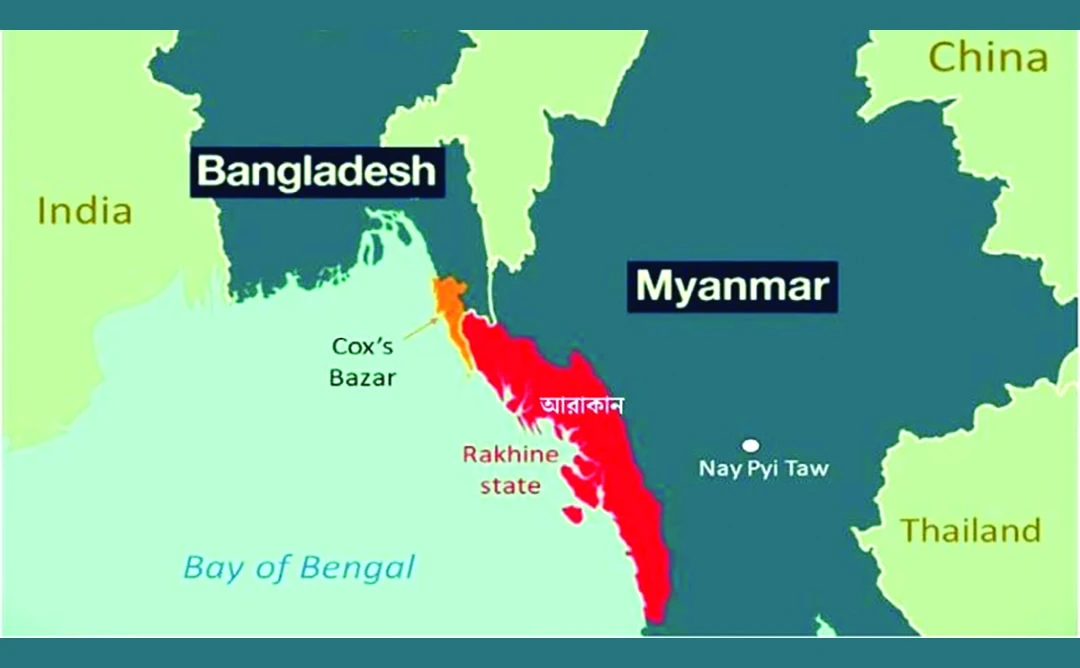
One of the devastating incidents that originated from Facebook activities in Bangladesh was 2012 Ramu (Cox’s Bazar) Violence. In late September in 2012, the monasteries, shrines, and houses of Buddhist inhabitants were burnt to the ground following an image posted on Facebook wall that depicted the desecration of the Holy Quran. The image was posted on the Facebook wall of Uttam Kumar Barua, a local Buddhist, by an unknown or fake user using a pseudonym. Following the Facebook post, thousands of people brought out protest processions and eventually vandalized and put fire on the temples, shrine, monasteries and houses of the Buddhist claiming that Buddhist youth Uttam Kumar Barua ‘insulted Islam’ on social media. Later, it was found in the several media and government reports that the Buddhist Uttam Kumar Barua was innocent and it was provoked by someone intentionally. The Ramu Violence clearly depicts how social media was used then to reach a vast number of people within a very short time. It was evident that nobody then raised any question about the authenticity of the Facebook post while a group took the advantage of social media. A year later, violence ensued following a fake Facebook post at a Hindu dominated neighborhood in Bonogram area of Pabna district in Bangladesh on November 3, 2013. Several mobs went on rampage and vandalised several idols and temples, and 25 houses of Hindu community following a Facebook post, reportedly posted by the minority boy Rajhib Saha on a ‘Facebook page’ that maligned Prophet Muhammad. Hindu community families had to flee the area to save them from the attack. However, it was reported later that the boy had no connection with the Facebook page or post. Rather, he was framed by someone intentionally misusing Facebook. In Comilla district, another attack was carried out on the Hindu community at Bakhsitarampur village under Homna upazila in 2014 following a rumour based on Facebook that left at least 28 houses of the community ransacked. Around 3,000 protesters went on rouge on the neighbourhood Hindu community after news that two Hindus posted defamatory comments on Facebook about Prophet Muhammad (pbuh) disseminated online that happened to be fake. Social media had also been used to trigger violence in this incident.
People are more interested or somehow bound by the demand of the system to share their personal details, e.g., birthday, contact address, e-mail, hometown, relationship status on their social networking profiles. Nowadays, social media has been the best place for investors worldwide to advertise them, to gather information or to sell their products but its number of features also poses a threat by attracting fraudsters for the crime. Phishing is also considered as technical fraud by social engineering where huge emails are sent to secure the trust of the targeted victim and asking him to do as directed rather rationally.
Instead of adequate measures are taken for security, the criminogenic aptitudes of potential cybercriminal has given way to new kinds of crimes like cyber fraud which includes selling and buying of stolen goods, non-delivery of products or services, payment fraud, online advertising frauds and the most familiar one is opening fake IDs on SNSs. The number of cybercrimes has mushroomed in Bangladesh in the last few years as the cases increased. A report recently published by Cyber Crime Awareness Foundation (CCAF), also revealed that around 73.71% of victims (both male and female) are aged between 18 and 30 years, 10.52% are below 18 while 12.77% between 30–45 years and 3% above 45 years of age. Online sexual extortion, Online threats and stalking on social media, Hacking of social media accounts, Spreading malware and viruses through social media, Fabricating news on social media, Posting videos of criminal activity, Bullying on social media, etc. are the common offences in Bangladesh committed through the social media.
Every invention has two aspects, both good and bad. People with a guilty mind use the technology to commit various crimes which are different from general crime as defined in the Penal Code, 1860. Thus, the Government of Bangladesh has already made several laws to regulate the activities of its subjects in cyberspace and to punish the criminals of the sector. However, as to the trial procedure, the Code of Criminal Procedure, 1898, shall be followed in adjudicating the cases under the purview of the computer-related crime. Prevention is always the best solution than cure. A social media user must be careful and cautious while operating various social media sites by posting videos, audios, comments, references of other news or posts, and transmitting messages. Any type of negligence may make his/her social media life complicated with severe consequences in real life. A social media user and the state should keep in mind the following instructions for the prevention of social media harassment:
* To avoid disclosing any personal information pertaining to oneself in SNSs.
* To avoid sharing any photographs, videos, images using social media apps to strangers and even to friends as it may be misused over time.
* To monitor and observe closely the SNSs visited, apps used, online social communities integrated and links attached by the children is important by the parents to protect them from online harassment.
* Revising and restructuring existing legal frameworks befitting with the demands of the cyber world.
* Using strong passwords or other security processes for different social media sites following the directions of the sites.
* Different social awareness programs should be launched to make the young users cautious of the various threats in social media use and their speedy recovery systems.
* As often every student both undergraduate and graduate level is now connected to the use of social media sites, a book chapter can be included in the ICT course on social media use discussing the threats and precautionary steps.
* Law enforcing agencies should be equipped with sophisticated technological instruments and be trained to cop up with the advancing rate of cybercrimes in social media.
* Government bodies like BTRC should be aware of the users having details and must have a coordinating mechanism with owners of the social networks to find out the criminals easily.
Human life was effortful before the wonderful invention of modern science. As the internet made our daily-activities easier, it also facilitated ways to do its related crimes for the criminals. Cybercriminals availing of unawareness and inefficiency of the human beings in using the internet do various crimes which compel the authority of the states to think of the ways to prevent them. A constructive solution is taken for children. The most recent optional protocol to the CRC, the OP3 on a communications procedure, allows minors to file a direct complaint to the UN, when their national legal system cannot guarantee remedy. Cybercrime causes huge damage in the world economy. In August of 2016, cyber security ventures predicted that cybercrime will cost the world $6 trillion annually by 2021, up from $3 trillion in 2015. So, it is our common duty to be more conscious while we use the internet, especially social media sites and other modern technology.
The writer is a Professor of Law at Daffodil International University; Column Writer; International Member of Amnesty International; Climate Activist of Greenpeace International and Visiting Professor at the Lyceum of the Philippines University (the Philippines) and Chandigarh University (Punjab, India). He can be reached at: kekbabu@yahoo.com
আরও পড়ুন -