








Editor & Publisher: Rabb Majumder
House # 05 (2nd Floor, 2-C), Road# 04, Banani DOHS, Dhaka - 1206
Phone: +8801715822782
Phone (Advertisement): +8801712863234
Email: rabb.h.majumder@gmail.com, info@securityworldbd.com

‘Injection Safety’ – A Serious Concern in Saving Lives
Md. Abdur Razzaq
07:17, 15 March, 2021

Md. Abdur Razzaq
Injections are the most common healthcare procedure worldwide. Some 1600 crore injections are administered each year in developing and transitional countries alone of which, according to WHO, 50% are unsafe resulting serious health risks to recipients, health workers and the public.
More than 90% injections are given for therapeutic purpose while 5 to 10% are for preventive services including immunization and family planning.
Administration of unsafe injection may cause disability and even death.
Reuse of un-sterilized injection device is responsible for transmission of life threatening viruses like HBV (Hepatitis B Virus), HCV (Hepatitis C Virus) and HIV (Human Immunodeficiency Virus).
WHO estimates that unsafe injections transmit 8-l6 million HBV, 2.3-4.7 million HCV and between 80,000 - 160,000 HIV infections each year.
Unhygienic and inappropriate use of multi-dose vials may also transmit blood borne pathogens.
Inadequate supply of safe injection devices was identified as a key determinant of widespread reuse of syringes and needles.
In Bangladesh, beside inadequate supply of safe injection devices, lack of awareness and economic constraint among health workers and recipients, are the two major factors responsible behind prevalence of extensive reuse of syringes.
While injections are administered for greater healthcare interest, safety part of injection procedure has to be ensured so that it does not harm the recipient, does not expose the health care workers to any avoidable risk and obviously, does not result in waste that is dangerous for community.
Observation reveals that adequate availability of injection devices in curative services enhances injection safety.
Provision of single use injection devices (One syringe for one injection) for prevention of infections with blood borne pathogens is very cost-effective investment in health.
It is unanimously agreed that “Syringes with a reuse prevention feature offer highest level of safety for injection recipients.
As per observation/guidelines of global health authorities (WHO, UNICEF, UNFPA) and as manufacturer of relevant devices, our concern is, implementation of following two major goals which needs adequate Government-support in terms of policy and finance:
1. Prevention of transmission of life threatening viruses like, HBV (Hepatitis B Virus), HCV (Hepatitis C Virus), HIV (Human Immunodeficiency Virus) through providing adequate supply of syringes with reuse prevention feature.
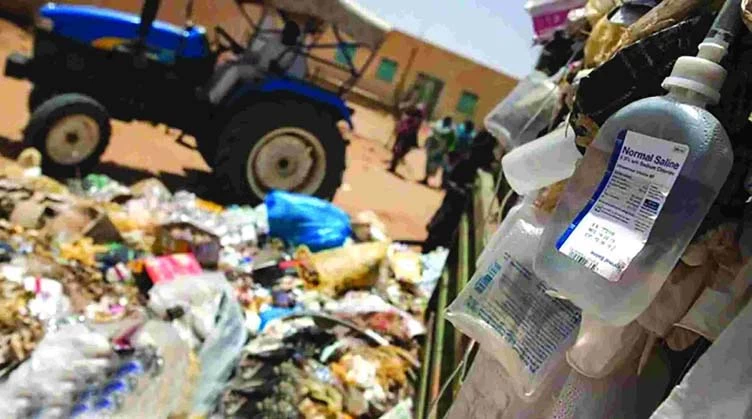
2. Safety of Health care service providers and community from undue risk and health hazards due to inadequate supply of safe injection devices, lack of proper sharps waste management and awareness in general.

We appreciate that in conformity with the recommendations of global health authorities [WHO, UNICEF, UNFPA], Bangladesh govt. through declaration of ‘National policy for Safe injection’ in 2004, strongly urged upon necessity of Auto Disable [AD] Syringes to be used in our greater health care sector [curative, diagnostic and preventive].
We further appreciate that our Govt. is already procuring AD Syringe from GOB fund for administering vaccines free of cost among neonates of Bangladesh though it is only 3-5 % of total requirement of syringes in greater health care sector [curative, therapeutic, diagnostic & preventive].
It is our pleasure to mention here that being an ISO-13485:2003 and CE 1023 certified manufacturer, JMI Syringes & Medical Devices Ltd., with the technical collaboration of ‘Star Syringe Ltd., UK, has introduced Auto Disable [AD] Syringe for the first time in Bangladesh as the pioneer manufacturer.
We also take pleasure to announce that with our limited resources, we already initiated ‘awareness campaign’ on “significance of injection safety in health” during our participation in ‘Asia Pharma Expo’ and ‘Meditex International Expo’ held at “Bangabandhu International Conference Centre” during 2005, 2006, 2008 and 2010 respectively, where an enormous curiosity and interest was observed among visitors.
According to WHO, 7 (seven) children die every minute in least developed countries due to lack of ‘Injection Safety’. This alarming situation demands effective measures to be undertaken on priority basis for implementation of our ‘National Policy for Safe Injection’.
In Uganda, safe injection legislation came into effect in June, 2007. Accordingly, no further importation of standard disposable syringe is allowed except Auto Disable (AD) Syringe.
‘Safe Injection Policy’ is now in place prior to legislation in Nigeria, Tanzania, Zambia, Ruanda and it is proposed in Indonesia as well.
We are hopeful, govt. of Bangladesh and concerned others will expedite their all-out efforts for implementation of the ‘National Policy for Safe Injection’ at all level of our health care sector and thereby contribute significant role toward saving lives.
Md. Abdur Razzaq, one of the distinguished business personalities and the Managing Director of JMI GROUP. The JMI Group is one of the world renowned and diversified global conglomerates of 32 companies with more than 7,000 highly dedicated and educated workforces particularly in the healthcare services.
আরও পড়ুন -