












Editor & Publisher: Rabb Majumder
House # 05 (2nd Floor, 2-C), Road# 04, Banani DOHS, Dhaka - 1206
Phone: +8801715822782
Phone (Advertisement): +8801712863234
Email: rabb.h.majumder@gmail.com, info@securityworldbd.com

Weaponization of media
07:11, 15 March, 2021


Syed Ishtiaque Reza
Technological advancement gives us great hope to think positively about our future. Technology is there to solve so many of our greatest challenges. At the same time, it appears to bring us closer to a dystopian nightmare as the international media, social media, blogs and sites are often designed for nefarious goals of propaganda or bullying.
In this context we must deeply think about ways and means to decide about damage-control exercise when a country is deliberately targeted by social media sites and even by the famous global news channels. The question appeared very pertinent as the Qatar based media organization Al Jazeera aired a documentary titled "All the Prime Minister's Men" recently targeting Bangladesh’s prime minister and the Chief of Army Staff. The channel even threatened to do more.
The excerpts of the documentary – (1) gang close to Bangladesh Army Chief and the prime minister extracts bribes from government contracts, (2) Bangladesh bought mass spying equipment from Israeli company based in Hungary and (3) the gang uses elite forces to kill their rivals.
This is not a simple move to malign Bangladesh. Vetter we can say, a cunning and well-thought-out disinformation and smear campaign by the news channel not only against the Bangladesh government, but also against the Army Institution. Our foreign ministry issued a quick response calling it a politically motivated "smear" campaign which is "false" and "defamatory". There was protest note also from the Bangladesh Army.
It seems that the Qatar based channel has broadcast a ‘paid content’ in which British Journalist David Bergman, who was convicted by the Bangladesh War Crimes Tribunal, has a prominent role. We are really surprised as to how a globally known news channel could be misused by a convicted person in such a manner against a country.
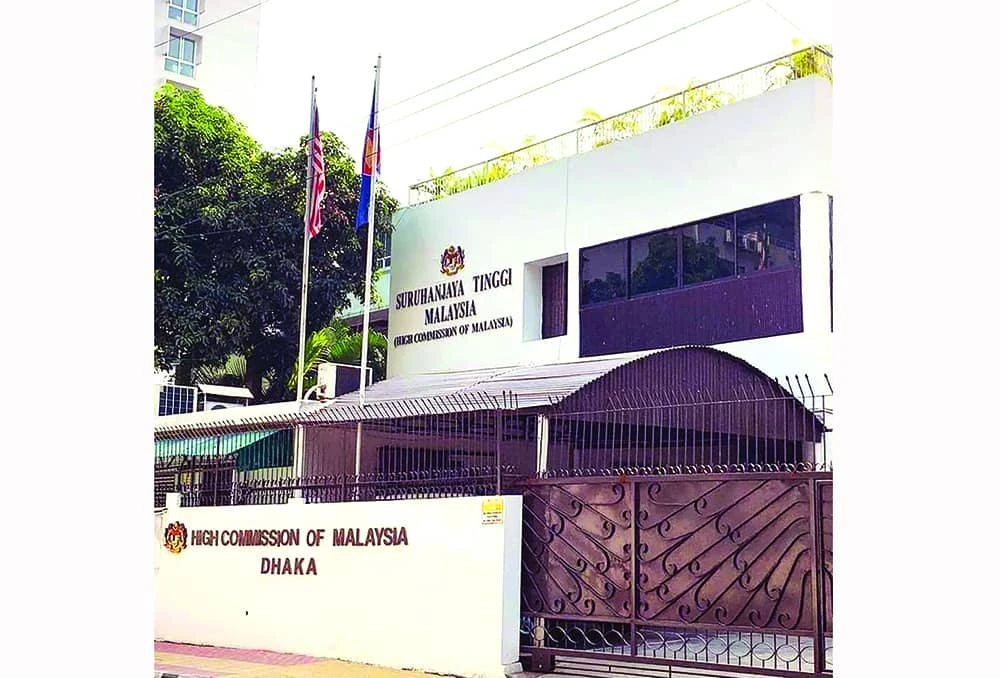
If a Bangladesh origin fugitive stays in Hungary and France and if he invests millions of Euros there, it is the duty of the EU authorities to take full cognisance of this report. From the editorial point of view the so-called investigative report failed to interview a single EU official on this serious allegation. If a wanted man lives in Malaysia, where is the opinion of the country’s interior ministry?
In fact, Bangladesh is watching the anti-Awami League and anti-secular bias in the channel's news content for a long time. For far too long, Al Jazeera has imitated itself as the mouthpiece of fundamentalist non-secular forces in Bangladesh. The channel questioned the process of Bangladesh government’s effort to try the war criminals. It reported an incident of violent clash between police and militant Hefajot e Islam activists with fake visuals and exaggerated death figures.
The latest documentary has established that the channel’s Bangladesh related contents are taken over by a powerful and wealthy anti-Bangladesh quarter based in Europe and the Middle East. Al Jazeera has become a propaganda broadcaster as far as Bangladesh is concerned. It has taken a clear position about Bangladesh’s present government, not based on journalistic priorities, but rather on the interests of that quarter. The thriller type documentary is all about politics, but not journalism.
But what is to be done if a famous channel plays a role in supporting Islamist elements in a sovereign country? What Al Jazeera is doing is nothing but weaponization of a media outlet. The content is full of misinformation and doctored images targeted the Army Chief and the head of government.
The government can now chalk out its strategy to face this channel that is aggressively promoting disinformation about Bangladesh. The most alarming thing is that the news channel even repackages the contents regularly produced by anti-Bangladesh activists. Those contents are there on social media for a long time.
Bangladesh can file a defamation sue against the news channel that now threatens the stability of the country. It is evident that the contents outlined in the report reflect a pre-occupation of the media house with maligning Bangladesh.
We believe the campaigns are sure to fail if Bangladesh can put forth irrefutable evidence, extensively documenting the news channel’s active planning, promoting, abetting, financing and executing militant activities in Bangladesh. By spreading such falsehoods, Al Jazeera or others can neither cast a shadow on the development of Bangladesh nor can divert the attention of the people in this soil from horrendous terrorist records of Islamic militants.
Definitely there are greater challenges to resolve, on an individual level. But it is crucial to think about our consumers. We can fight machines, but we need to have intelligent choices too to fight propaganda.
Syed Ishtiaque Reza is the Editor in Chief of GTV.
আরও পড়ুন -