






Editor & Publisher: Rabb Majumder
House # 05 (2nd Floor, 2-C), Road# 04, Banani DOHS, Dhaka - 1206
Phone: +8801715822782
Phone (Advertisement): +8801712863234
Email: rabb.h.majumder@gmail.com, info@securityworldbd.com

The youth in the History of Bangladesh 1947-71
06:48, 1 April, 2021

Akku Chowdhury
It’s been just fifty years we fought the war of liberation and became a free country and it’s a pride to see the country move forward as a stable nation economically and socially to a decent level. Sometimes its disheartening to see such denials to uphold the spirit of 1971 that established this nation and spearheaded to development of the people and the country. Although after 1975 disinformation and distorting historical facts have derailed a generation but I am hopeful that the truth shall prevail and win at the end. I see the youngsters of today taking Bangladesh to a newer heights. I see it happening and as we celebrate the fifty years of the freedom struggle I find that a bonus to be proud of for my participation in that war. In this writing I have tried to timeline our struggle for emancipation from 1947-71, as a glimpse to our past, to understand, the reality that, yes, we have a great past to lean on as a foundation but must move forward and not stay stuck in the past. Use the past and its heritage as our strength to move forward with the spirit of dedication and passion for the nation that has given us an identity.
1947 saw the end of British rule in the Indian sub-continent and with it the division of India into two separate countries: India and Pakistan. Pakistan was an anomalous nation. It was comprised of two parts, East and West Pakistan that were separated by 1,000 miles of foreign territory. Moreover, they had different languages, cultures, history and heritage.
Pakistan was grouped under a banner of Islamic Nation of Pakistan, just on the basis of religion. The partition begot much pain and misery. It gave rise to numerous problems including migration and mistrust. Thousands of people displaced, homeless and killed for differences of religion and faith. The East Pakistan student community were uprooted from their studies and had to take the shelter in a different land. From the genesis of Pakistan, the dominance of West over East became a persistent Problem.
As back as 1948, when the then leader of Pakistan, Mohammed Ali Jinnah declared in Dhaka that Urdu and only Urdu will be the State language of Pakistan the students were enraged and politicians like Sheikh Mujibur rejected such a thought even outright.
On 21 February 1951, four youth, Barkat, Salaam, Jabbar and Rafique and other nameless forfeited their lives to establish the rights of their mother tongue. Their supreme sacrifice became an incandescent source of inspiration for all subsequent revolutionary endeavors for equal rights in every sphere of life as a citizen of independent country.
In 1954, leading East Pakistani political leaders like Sher-E-Bangla, Shurowardy and Bhashani united to realize the Bangalees emancipation so formed a United Front, which swept the East Pakistan elections that year. The Muslim League went down with all hands but Bengalis, however, were still not awarded their legitimately earned political rights.
Martial law was instituted in 1958. General Ayub Khan assumed power. India and Pakistan started war in 1965 over the Kashmir issue. East Pakistan financed the Pakistani Military during the strife, yet the East Pakistanis were not granted any significant position in the armed forces. Nor was Fast Pakistan provided any security during wartime. This was further proof of the parody and injustice that the Pakistani nation embodied.
In 1966, Sheikh Mujibur Rahman declared the six-point demand. The entire nation rallied around the program in ardent unity. Sheikh Mujib and several other leaders were arrested. They were charged with the Agartala conspiracy case.
The nation boiled over with the mass uprising of 1969. The roads of Dacca spilled over with the blood of Asad, Matiur and many other unknown martyrs. Sheikh Mujib was freed and the masses consecrated him with the title of Bangabandhu. Ayub resigned in the face of public wrath and General Yahiya took the political stage.
1970 saw the first general elections in the history of Pakistan. The Awami League achieved a glorious victory under the leadership of Bangabandhu. They became the majority party of the entire nation. Yahiya traveled to Dhaka to meet with Sheikh Mujib. Bangabandhu talked about his plans to achieve the rights of Bengalis. He said that Bengalis demanded political and economic rights and warned that any efforts to deprive Bengalis of these rights would be strongly resisted. After that election there was a mood of celebrating the hard earned freedom hoping that at last Bangalees will be governed by a leader of their choice, they have elected and represents the people of the then East Pakistan. The Bangalees really never thought, in their wildest dream, what was been planned for them by the conniving and heinous Pakistani troika leadership of Military, Politicians and Bureaucrats.
On March 1 1971, General Yahiya, out of the blue, declared the suspension of parliamentary proceedings that was to be held within a week and the members of the parliament would have elected Bangabandhu as the PM of Pakistan. This was a bombshell no one was expecting but Sheikh Shaheb was not to be shaken by such maneuvers. The entire nation came to a blinding halt in response to Bangabandhu urging of a Non-Cooperation Movement in response to that suspension of Parliament. All offices, schools, court and colleges closed down. The roads became venue to show our rage and violent protest occurred as in some cases the Pakistani Military authorities tried to gag them.
In the historic speech on March 7 1971 at the racecourse field, Bangabandhu enunciated the Bengali demand for freedom. He declared, this time the final struggle is for our freedom; this is the fight for our emancipation. The 18 minutes speech was not just rhetoric of a great leader but a manifesto for the people of how, what and what to do in case he is arrested by the Pakistani ruling junta.
The Pakistani political and military rulers began to pour into Dhaka to negotiate and come to terms with Sheikh Shaheb. Bhutto arrived in Dhaka for talks and moved around with strongly armed security. Yahiya came too. On the other hand, the entire population became increasingly clamorous in protest. The new flag of Green, Red with a golden map of Bangladesh (the then East Pakistan) was designed and raised by the students in Dacca and across the country replacing the Pakistani flags. Long dialogues continued by the politicians and Military leaders. Sheikh Mujib said in a press conference that the discussions were in progress still trusting the integrity of Pakistanis. Behind the talks, however, a heinous conspiracy was in motion.
On the night of 25 March, hordes of armed Pakistani soldiers attacked on unarmed general populace in an act of extreme treachery. A barbaric chain of murder was commenced. The streets of Dhaka became engulfed in a waves of innocent Bengalee blood. The betrayal coded as Operation Searchlight selected the Universality hostels, university teachers. Bengalee Police and Para Military forces to wipe out in their first round.
The world learned about the genocide first from a British journalist Simon Dring who escaped the Military dragnet to expel the foreign journalist who came to Dacca for the Parliament opening but stayed back to cover the movement of Non Cooperation. He hid himself on top of the Intercontinental Hotel to witness the mayhem created by Pakistanis. Bangabandhu was arrested and taken to Karachi. Prior to the arrest, he declared independence through wireless telephone. Major Zia ushered the independence of Bangladesh on Chittagong radio in an announcement on behalf of Bangabandhu. People from all walks of life pledged to the cause with renewed vigor. The Bangalees in the Pakistan military immediately revolted and the students, workers, peasants formed a makeshift forces to resist the Pakistanis with whatever they have as Bangabandhu had instructed on his March 7 speech.
On 17 April, the first caretaker government was constituted in Meherpur. Bangabandhu Sheikh Mujibur Rahman was elected as the first president. Syed Nazrul Islam becomes the caretaker president. Tajuddin Ahmed accepted the role of Prime Minister.
The Pakistani forces, meanwhile, continued their belligerent efforts to tame the land and the people. Millions of refugees were forced to leave the newly formed nation as the Pakistanis became more violent and aggressive. Nearly I million people took shelter in neighboring India. The proliferation and organization of the Bangladesh freedom forces continued. Bengalis instituted exceptional resistance just by the dint of courage.

On one side, the Pakistani forces continued to penetrate deeper areas of Bangladesh. And on the other guerrilla training continued on the Indian border and other free areas of Bangladesh. The guerrilla fighters fought side by side with the formal Bangladeshi armed forces. The extent of their damage on the Pakistani forces became increasingly pronounced. The Indian Government led by the then PM Indira Gandhi was concerned and her borders were opened for refugees and shelters were opened to feed them, treat them and care for them.
The Indian Government and her people showed great patience and their humanitarian mindset was reassuring to the homeless Bangalees. They opened their door for the refugees and freedom fighters. Although the western Government were in denial but their people and Press were most concerned and started sending care packages for the refugees. The Indian army was training and providing the arms to the Mukti Bahini formed with the Bengalee soldiers of Pakistan Army and volunteers form para Military forces, students, peasants and workers.
In the occupied Bangladesh, the leader of Pakistani armed forces, General Niazi, boasted, If foreign help is stopped, we can tackle the Bengalis in 15 seconds. If they do get help, we shall teach them a strong lesson. They are not soldiers, they are revolutionaries. It will not take long to finish them off. The further they come out of their camp the better. That will make it easier for us to kill them.
On 3 December, the then Prime Minister of India, Indira Gandhi was giving a speech in Calcutta. It was then that the Pakistani forces attacked the Western frontier of Bangladesh. The result was the commencement of war between India and Pakistan.
After that the Indian forces worked in concert with the Freedom Fighters and as allied forces. The Indian Forces were diverted in two front and as they moved into the western front making gains against the Pakistanis helped by the facts that the eastern front had the Mukti’s to help and also the fact that the Indian Military intelligence got very important and sensitive secrets from the Bangalee officers of Pakistan Army who revolted and joined the Liberation War. Many of them managed to smuggle out secret files and location of Pakistani Military installations while escaping from West Pakistan Cantonments where they were posted. These brave officers and soldiers not only showed their dedication and courage but fought bravely against the Pakistani Forces they had once were part of. After the killing, rape, loot, arson and mayhem by the Pakistanis it was not possible for any conscientious Bangalee to support them. The Liberation was the only option. There was intense attack on land, water and air. Gradually the Pakistani forces started retreating. The air raids in Dhaka became stronger. The expatriates took shelter in Hotel Inter-Continental.
Qn 16 December, Lieutenant General Aurora arrived at Tejgaon Airport to accept the surrender of Pakistan Forces to the Allied Forces of Bangladesh and India. General Niazi of the Pakistan Army signed the treaty of surrender at the racecourse thus Pakistani domination was annihilated. General Aurora signed the treaty on behalf of the allied forces. Group Captain A.K. Khandakar represented Bangladesh at the ceremony.
When Pakistani armed forces were trapped and defeated they engaged in a most cowardly brutality in the face of imminent defeat. Deep into the night of December 14, two days before surrender, the finest intellectuals of Bangladesh were captured from their- homes and killed at mass graves in Mirpur Rayer Bazaar. Bangladeshi women were also victims of Pakistani atrocity.
This is how the free and independent Bangladesh came in to existence. It was through much bloodshed and much self-sacrifice that we achieved the liberation of our motherland. We must never forget the events and the people that brought us here. Our freedom, our Independence, our flag was not given to us on a golden platter. We fought for it and we fought hard. We are grateful to Indian people and her Government for their unconditioned help and assistance. We fought our war and the Indian Military help us to be trained and equipped. In the final thrust we fought together, we bled together and we won the Victory together as we dared together. We fought our war and they fought theirs. After the Victory Indian Military forces left our soil at the earliest and that is something we shall always be grateful to Bangabandhu Sheikh Mujibur Rahman and Indian Prime Minister Srimoti Indira Gandhi.
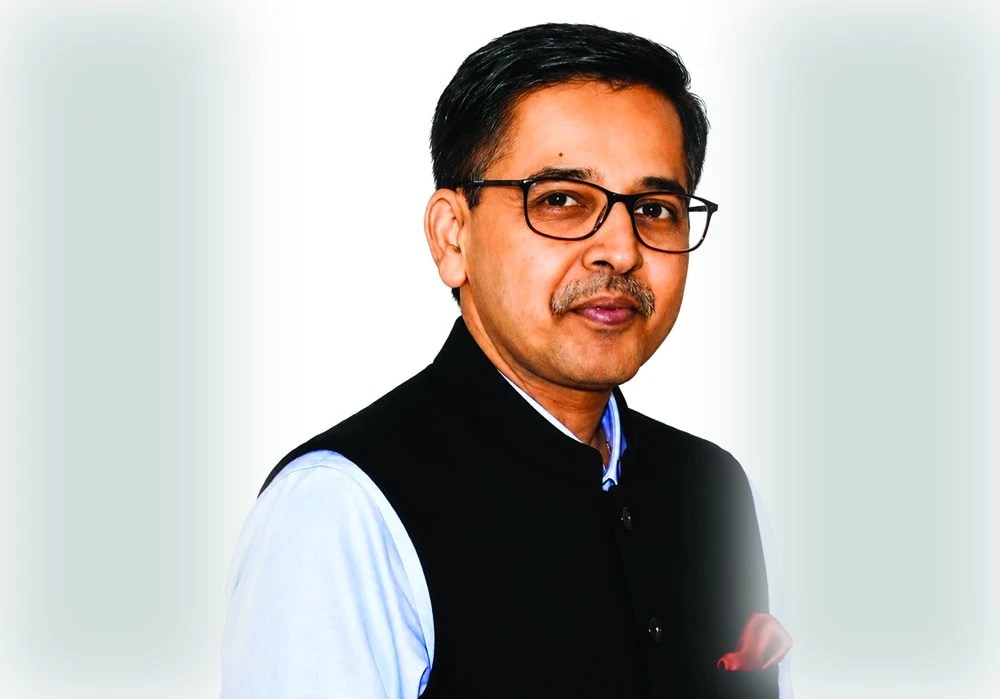
Akku Chowdhury a veteran freedom fighter, Director of Liberation War Meuseum and former CEO of Transcom Foods Ltd.
আরও পড়ুন -