




Editor & Publisher: Rabb Majumder
House # 05 (2nd Floor, 2-C), Road# 04, Banani DOHS, Dhaka - 1206
Phone: +8801715822782
Phone (Advertisement): +8801712863234
Email: rabb.h.majumder@gmail.com, info@securityworldbd.com

Factors Favor Rapid Growth of Transnational Crime
09:16, 1 April, 2021


General Aziz Ahmed
Arms Trafficking
Arms trafficking, also known as gun running, broadly refers to the illegal trade of contraband guns, ammunition, and other weapons. This illegal business occurs almost in all parts of the world at varying scales. These are normally concentrated in areas affected by civil war, armed conflict, violence and organized crime. However, the route of traffic may include any part between places of origin to destination. Although it may include a person to person selling of arms in small numbers, it assumes real meaning when trafficked happens in large quantity is amongst groups or gangs.
Traffickers have normally not licensed arms dealers. One study of a US survey indicates “many of the traffickers did not apply for arms export licenses or attempt to exploit licensing exemptions; they simply bypassed the licensing system entirely” (Small Arms Survey Issue Brief 2016). Sometimes they may possess a license, but under its cover, they commit illegal trafficking of large quantities.
Commonly trafficked arms and weapons are small arms and light weapons, but records of trafficking short-range missiles are also evident. Traffickers normally smuggle the arms through land and sea routes. Innovative ways to conceal the weapons in customized vehicles or sea containers are adopted. Trafficking in parts and accessories is also more commonly used. However, nexus with corrupt officials is a basic need to get the shipment through across the border. Smuggled weapons typically end up in the hands of criminals or people with criminal intentions. According to the head of UNODC, these “illicit arms fuel the violence that undermines security, development, and justice worldwide” (White House Report 2010).
Arms trafficking is one of the vital fueling factors for the spread of civil wars and regional conflicts. It also patronizes terrorists, drug cartels, and other armed groups by stockpiling their arsenal inventories. “Arms trafficking is normally conducted by private entities, but certain governments are also allegedly involved in arms trade by deliberately arming proxy groups or insurgencies against rival governments, terrorists with similar ideological agendas, or other non-state armed groups” (Transparency International 2014). The trend is widely prevalent in the conflict-prone area of Africa and other regions. However, be it either by a private entity or government patronization, arms trafficking always complements other domestic and organized crimes and bears the potential to destabilize neighboring countries and the region.
Arms trafficking in South Asia is a matter of serious concern for the region. Indian Defence Review states that “the current scenario amply displays that Africa, Middle East, and South Asia (read Afghanistan and Pakistan) remain the most active markets for illicit trading of arms and munitions” (Indian Defence Review 2018).
There are several factors and reasons that contribute to the high trend of arms trafficking in this region. More than half a century-long conflict in Afghanistan is a primary reason to increase the demand and trends of arms trafficking in South Asia. Pakistan, which has a volatile border with Afghanistan, is also seriously affected by the trend. The presence of Religious Militants in the Kashmir Region also fuels the trend of arms trafficking. “In South Asia, an estimated 63 million guns have been trafficked into India and Pakistan” (Jacob 2015).
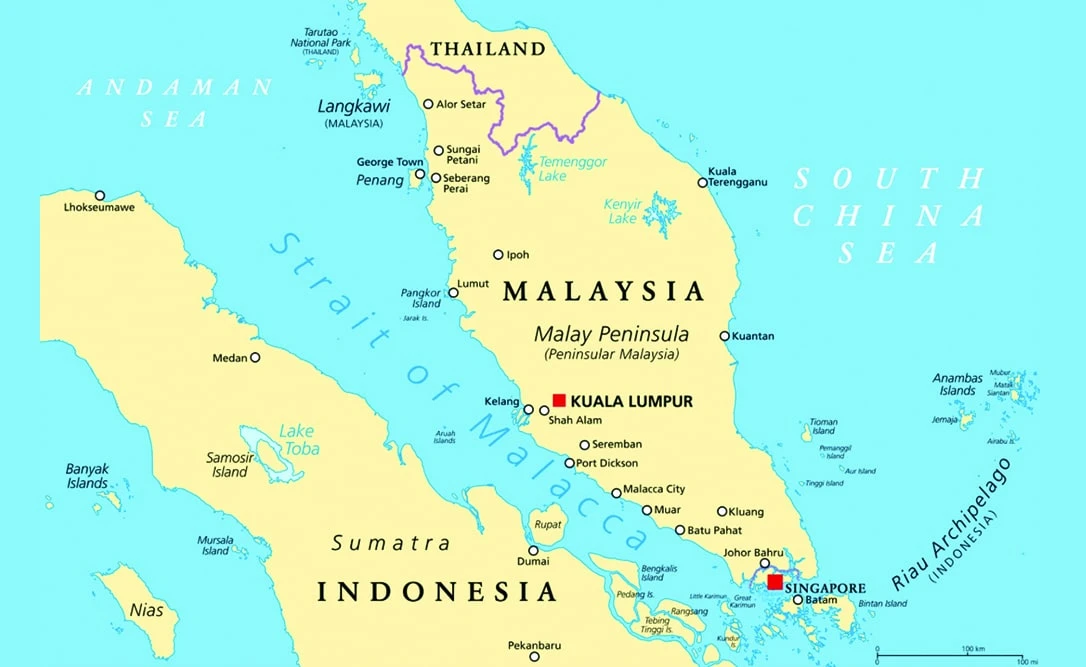
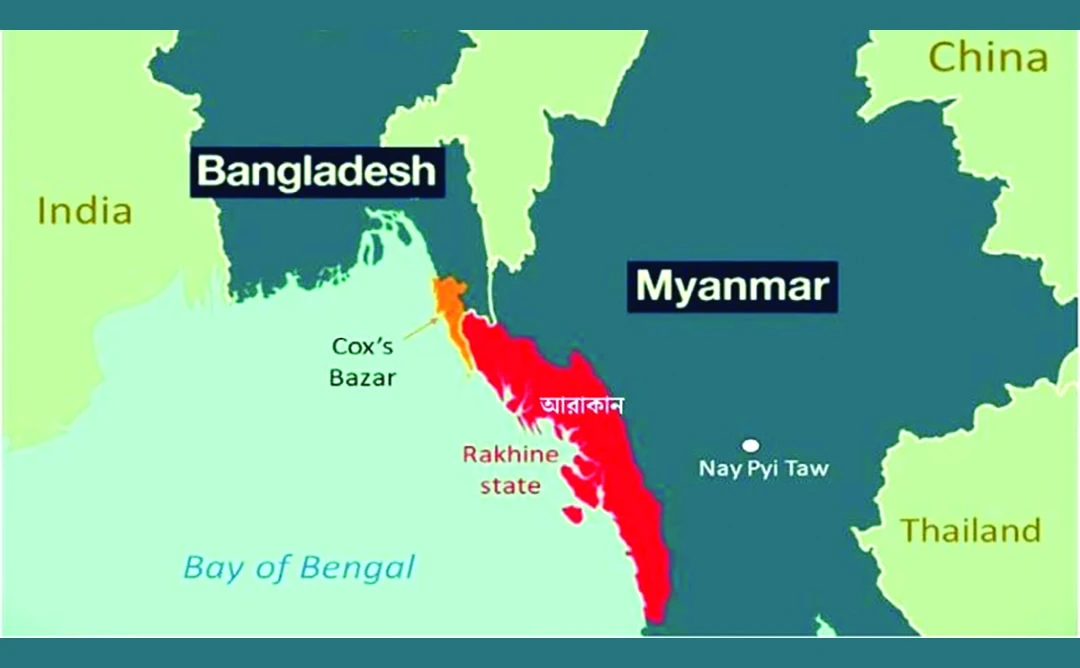
The insurgency has a direct correlation with the trafficking of illegal arms and explosives. South Asia is an insurgency prone area. “South Asia has been marred by constant intrastate conflict. Over the past few decades, sustained insurgency movements have proven detrimental to the region and its people” (Ayush 2018). Although the Tamil crisis in Sri Lanka has been tamed, ‘Seven Sisters’ of Indian North-Eastern provinces, Mao’s in Nepal, Chattogram Hill Tracts of Bangladesh still face insurgency in the active or semi-active forms. Insurgencies in the neighboring Arakan state of Myanmar also affect the security environment in South Asia. Insurgency infested North–Eastern province around the India-Bangladesh-Myanmar border has grown to be one of the main areas of the illegal arms trade in this region today. “Mizoram is the hub for arms smuggling. A section of Chinese refugees who are illegally settled in different places of Mizoram, is involved with international arms smuggling network as well” (South East Journal 2019).
Arms trafficking in South Asia also remains hostage to a few geographical factors. The proximity of China (which is a large arms-producing country), on the northern part of South Asia also proliferates the flow of arms trafficking in the region. The TOC nexus, in collaboration with the insurgents, terrorists, and corrupt segment of the administration, manages to buy and trade Chinese arms around the conflict-prone areas of the region. Former Chief of Assam Police stated that “the rebels have started picking up Chinese weapons from the Sino-Burmese border and bringing it to their bases in Northern Myanmar. From there, these weapons are carried into India and possibly Bangladesh and Nepal” (Subeer 2014). Geographically, South Asia is also located in between the global drug hubs known as ‘Golden Triangle’ and ‘Golden Crescent’. The growth of ‘Narco-terrorism’ around these drug hubs also contributes to the spread of arms trafficking in the region. Terrorists exploit the financial power of drug cartels to buy and trade weapons, causing a rise in illegal arms trafficking in South Asia and the adjacent region.
Money Laundering
According to the IMF, the scale of money laundering worldwide could be somewhere between 2% and 5% of world GDP. “Money laundering is generally a financial transaction or a series of transactions where criminals try to disguise the identity, original ownership, and destination of money that they have obtained through criminal conduct. A simpler definition of money laundering would be a series of financial transactions that are intended to transform ill-gotten gains into legitimate money or other assets” (Legal Dictionary, 2015). Such laundering is done in a way to make it appear that the proceeds have come from a legitimate source.
Money laundering involves three basic steps; first, to introduce the illegal money to the financial system, second, concealing the source through complex and multiple transactions, and third, returning the money to the financial world so that it appears legal. Of these three steps, the first one, i.e. introducing the illegal money to the financial system is most risky and prone to detection. “This is done in mainly in three ways by the launderers; firstly, disguising the source of the money-such as disguising a prostitution ring as a massage parlor, secondly changing the form-such as changing cash into a money order, or thirdly, moving the funds-such as taking money from one large bank account and putting it in several smaller accounts under different names” (Legal Dictionary 2015).
Laundering is a major organized crime as criminals need to conduct a series of financial transactions to run criminal activities or network and preserve the earnings. “Through money-laundering, criminals disguise the illegal origins of their wealth and protect their asset bases. Laundering enables them to avoid the suspicion of law enforcement agencies and prevent leaving a trail of incriminating evidence. In the long term, laundering also allows criminals to accumulate and hide wealth, avoid prosecution, evade taxes, increase profits through reinvestment and fund further criminal activities” (UNODC on Money Laundering). Laundering allows the TOC groups to transform their criminal earnings into seemingly legitimate funds. Taking advantage of rapid developments in the financial transaction process, information technology, and communication of the recent era, criminals are exploiting the scope of money laundering widely than ever before.
Like other TOCs, money laundering is also common in the South Asian region, and the trend is on the rise. The primary reason for money laundering in the region stems primarily from the prevailing culture of corruption in South Asian countries. White-collar criminals, corrupt elites in politics, business, or government segments all launder their illegal money to foreign banks and agents. “Trade-based money laundering (TBML) in South Asia has been on the rise in recent years, driven by a host of factors including robust economic growth, a relatively weak regulatory environment (with the key exception of Singapore) corruption issues, and the presence of sophisticated transnational criminal networks. These factors, as well as political, socio-economic and cultural dynamics, put the region at heightened risk for TBML in which financial institutions, corporations, and governments should play a greater pro-active role in combating ” (Data Derivatives 2018).
A substantial segment of wage earner migrants from almost all the countries of South Asia lives in Middle-East, Europe or America. For avoiding taxes, a maximum of them adopt money laundering popularly known as ‘Hundi’ in the region. The financing system of the organized criminal groups, terrorists, and radicals working in the South Asian region also depends on money laundering. These terrorists and transnational threat Cartels are financed through money laundering by their parent entity, ideological diasporas, or even by sponsor states. Intra-criminal and terrorist group financial transaction is also done through money laundering. With the introduction of the internet-based financial system, money laundering for criminal or terrorist is not a difficult task today as it has eliminated the need for the physical carriage of money.
Cyber Crime
Many questions about whether Cyber Crimes can be included as a transnational threat or not, as unlike traditional organized crime, it is often conducted at an individual or small group level without physically crossing the border. Yet, because of the nature of its virtual ingress across the countries, it is also transnational. However, organized crime and Cyber- Crime may not be synonymous, yet the degree of overlap, dependence, and involvement between the two phenomena leads cybercrime to be a dominant transnational threat of this era. Cyber Crime is simply defined as “any crime that is facilitated or committed using a computer network or hardware device” (Sarah & Ford 2006). However, it differs from a Cyber Attack or cyber warfare where the ultimate objective is to attack the entire functional system of the computer network. Cyber Crimes are conducted to facilitate or to perpetrate a crime itself whereas Cyber Attack is made to threaten social or national security.
Cyber facilities are exploited by the Transnational Organized Crime groups mainly in two dimensions; facilitating in the conduct of crime or actual conduct of a few kinds of Cyber Crime. When a criminal gang is using the cyber facilities to coordinate and conduct an organized crime, it is a facilitating role. Examples can be passing coordinating instructions through the internet for safe passage and distribution of drugs, receiving payment through internet banking for human trafficking, or paying the agents for shipment of illegal arms. On the other hand, cyber fraud, theft, money laundering, hacking, pornography all can be cited as a separate Cyber Crime by themselves.
Exploiting the capabilities and opportunities provided by the internet today criminal networks are conducting organized crimes with speed, ease, safety, and across wider areas. As the world has increasingly gone digital over the past decades, the transnational threat has also assumed its digital dimension. Cyberspace today is not only the realm of citizens but also the realm of hackers, drug dealers, traffickers, or illegal gamblers.
There are several reasons why Transnational Organized Crime gangs are turning increasingly to cyberspace. It offers a scope of anonymity to the users, eliminates the need for physical presence or movement, and offers speed and secrecy to coordinate the crime over any part of the world. The cyber facility also allows a crime to be conducted without any physical documentary evidence to be produced in the trial. “Organized criminal groups are, therefore, gradually moving from traditional criminal activities to more rewarding and less risky operations in cyberspace. Cyber Crimes conducted by transnational threat networks threaten sensitive corporate and government sector’s network system. This diminishes people’s worldwide confidence in the international financial system-banking, stock markets, e-currency, and value and credit card services—on which the world economy depends” (Tatiana 2020).
The cost of cybercrime to the citizens is also high. “One estimate shows that online frauds perpetrated by Central European Cyber Crime networks have defrauded U.S. citizens or entities of approximately $1 billion in a single year. Pervasive criminal activity in cyberspace not only directly affects its victims but can imperil citizens’ and businesses’ faith in these digital systems, which are critical to our society and economy” (White House Report 2010).
With the growth of net-based online communication and system, the South Asian region has also grown to be a subject of Cyber Crimes. In a survey on a district city of Bangladesh, it was found that “10.16% respondents use the internet daily, 16.95% use six days a week, and 28.81% use five days a week” (Kamruzzaman 2016). The trend is more or less similar in other parts of South Asia, and it is sharply on the rise. However, the internet users in South Asia are increasing at a faster pace, but the user’s consciousness about safe handling and use of net or online system has not increased at par with. Lack of education and technical knowledge of mass people about the virtual system and its security process enabled the cybercriminals to commit their intended crimes in the South Asian region with a greater edge than other parts of the world.
Financial fraud, mal-wares, hacking, cheating, blackmailing, sexual abuse, pornography are the most common types of Cyber Crimes around South Asia. Cyber Attack in the bank system is the highest nature of financial Cyber Crime in South Asia or the Asia Pacific in general. The Cyber Attack against Bangladesh Bank in February 2016 showed how severely cybercrime has spread over the global banking system. “Up to 90% of Asia-Pacific banks and companies reported some form of Cyber Attacks since 2016. Business revenues lost to a Cyber Attack in the Asia Pacific came to$ 81.3 billion in 2015” (Financial Times 2020). The pillaging of the Bank’s ATM machine is another form of frequently reported Cyber Crime in South Asia. At an individual level, people are financially trapped by ATM and credit card fraud, a lucrative offer of jobs, tasks, products, rewards, gifts etc., Hacking, cheating, blackmailing, victimization, sexual abuse the spread of pornography in and through social networks are also common trends of Cyber Crimes in South Asia.
Another important aspect is the formulation and enforcement of Cyber Crime regulations. South Asia and in general Asia is lagging in the formulation and enforcement of Cyber Crime regulations. “While 154 countries (79 percent) have enacted Cyber Crime legislation, the pattern varies by region: Europe has the highest adoption rate of 93% and Asia and the Pacific the lowest 55%” (UN Conference on Cyber Legislative Worldwide 2020). Lack of legal parameters and its enforcement also encourages the spread of Cyber Crime in South Asia.
Infectious Diseases - A new Threat to International Peace and Security
The first recorded pandemic occurred during the Peloponnesian War in 430 B.C. suspected to be due to typhoid fever, the pandemic contributed to the Spartan victory over the Athenians. Since then infectious diseases have had a significant impact on the course of human history. The outbreak of Severe Acute Respiratory Syndrome (SARS), the spread of which in 2002 - 2003 caused the first pandemic of the 21st century. Though it arose in China but affected Hong Kong more severely. The Ebola outbreak began in December 2013 in Guinea, spreading quickly to neighboring Libya and Sierra Leone. COVID-19 is in the same family as the coronavirus of SARS, Ebola, Flu, AIDS, Zika etc., The explosive outbreak of the new novel coronavirus, COVID-19 was first identified in Wuhan, the capital city of Hubei province in China. The outbreak is challenging the global community, its governance structures, and its mechanisms for international collaboration.
In today’s world, infectious diseases that turn into epidemic or pandemic are considered a serious threat to national and international peace and security. Infectious diseases appear to be constituted a national security threat that severely affecting public health, the national economy, the food system, development progression, and many more fields.
These infectious diseases arose in developing countries, whose spread in developed countries has been facilitated by the process of globalization. The globalization process and the increase of movement of people around the globe accelerated the diffusion of infectious diseases rendering them a global threat. The developed countries, in particular, found themselves vulnerable to the spread of health pandemics generated in the third world.
The impact of Ebola in 2014 was so heavy that the United Nations Security Council adopted Resolution 2177/2014 on the outbreak of Ebola. Security Council for the first time considered and subsequently determined a public health issue a threat to International Peace and Security and classified an infectious disease as a threat to peace and security according to Article 39 of the UN Charter (Ref: Infectious Diseases as a new threat to International peace and security; by Dr. Ilja Richard Pavone, dated 22 April 2016). The attempt to change the perception of infectious diseases as a global security issue was led by the USA with their National Intelligence Council Report 2000 which ascertained that the consequences of epidemic outbreaks may lead to conflict or increase the likelihood of conflict.
The designation of the Ebola outbreak as a threat to international peace and security may be comparable to the current COVID-19 outbreak. Although the world body or the UN Security Council has not yet declared the COVID-19 outbreak as a threat to International Peace and Security, but compared to the Ebola outbreak where 28000 people were infected over the course of about 02 years time, COVID-19 has achieved this number in just less than 02 months and is in fact approaching seven times the number of Ebola infections. Additionally, Ebola outbreak remained mostly defined to West Africa where as COVID-19 has already spread over 155 countries and territories across the 06 Continents.
The coronavirus pandemic is more than a global health crisis. It is a gamechanger for international peace and security. It has exposed the fragility of humankind and laid bare systematic and entrenched inequalities that are testing the resilience of societies. It has thrust geopolitical challenges and hard security threats back into the spotlight. It is exacerbating grievances, undermining social cohesion, and fuels conflicts and therefore also likely to act as a catalyst in the spread of terrorism and violent extremism. The world has entered a volatile and unstable new phase. The warning light are flashing. Supply chain disruptions, protectionism, and growing nationalism are significant tensions in international relations. Raising unemployment, food insecurity and the devastating effects of the climate emergency could escalate into political unrest. Domestic violence against women has spiked to alarming levels. A whole generation of over 01 billion students has seen its education disrupted. Many young people are experiencing a global recession in their short lives. They are worried and disillusioned by their prospects in an uncertain world. They feel left out and their interests neglected. People are losing faith in political leaders and an epidemic of online misinformation has run rampant, providing a breeding ground for xenophobia, hate speck, and dangerous narratives. Terrorists are exploiting the social and economic hardships caused but COVID-19 to radicalize and recruit new followers. Neo-Nazis, white supremacists, and conspiracy theorists are stirring up division and polarization in the wake of the virus and protests around the world. The pandemic has also highlighted vulnerability to the new and emerging forms of terrorism such as bio-terrorism and cyberattacks on critical infrastructure. The world faces grave security challenges that no single country or organization can address alone.
Should the Security Council decide on discussing the matter and subsequently designate COVID-19 as a threat to international peace and security, it may call for a range of measures. Measures may include calling on states to implement mechanisms for rapid diagnosis, isolation of suspected cases, increasing capacity for treatment of cases, and bolstering public health care systems. At the same time given the widespread trend particularly taking place online regarding disinformation around COVID-19.
Nonetheless and bearing the above in mind, one may note that the emergence of infectious diseases as a threat to international peace and security was already in 2005 addresses by UN Secretary General in his report in “In Larger Freedom”. In that report, former UN Secretary-General Kofi Annan highlighted that “Threats to Peace and Security in the 21st century include not just international war and conflict but civil violence, organized crime, terrorism and weapon of mass destruction. They also include poverty, deadly infectious disease and environmental degradation since these can have equally catastrophic consequences” (Reference: COVID-19 as a Threat to International Peace and Security- by Marko Svicevic dated 27 March 2020).
This coronavirus has shaken the whole world, caused standstill in all sectors, generated blame game. This COVID-19 pandemic and its spread whether a Transnational Organized Crime (TOC)/transnational threat or otherwise, only the future will say.
Post Cold War Geo-Strategic Reality
The end of the Cold War and the subsequent collapse of the Soviet Union diminished the continuous tension between capitalist and communist blocks. The world being unipolar also diminished the need for capital blocks to exert and maintain their direct or even indirect control over various parts of the world. Elimination of pervasive tension amongst superpowers reduced inter-state conflicts but increased intra-state conflicts enormously. “This change has initially led to internal disorder, the demise of previous authority structures, reluctance on the part of the population to new official control, the revival of ethnic antagonisms, and a collapse in the judiciary and security agencies, often entailing their subordination to or cooperation with organized crime.
“(Douglass 1995). Few pre and Post Cold War major events like the elimination of USSR, disintegration of Yugoslavia through civil war, German reunification, Chinese economic reform, the emergence of both new trading blocks and newly industrialized countries have particularly been particularly relevant and beneficial for growth and expansion of transnational criminal groups. Following the fall of the USSR, the dissolution of central control allowed the transnational criminal groups to quickly make contacts and spread in Eastern European countries. Consequently, future developments, as well as the consolidation of pluralistic regimes in these states, were at stake. “The triumph of capitalism, a weak or un-existing civil society, and a peculiar political culture in many of these countries have led to the troubled establishment of free-market mechanisms without the accompanying control measures. This change has initially led to internal disorder, the demise of previous authority structures, reluctance on the part of the population to new official control, the revival of ethnic antagonisms, and a collapse in the judiciary and security agencies, often entailing their subordination to or cooperation with organized crime” (Douglass 1995). This power vacuum, political disorder, intra-state conflict, and overall fall in the living standards have provided excellent conditions for recreating, establishing, and expanding large criminal groups.
Globalization
“Globalization refers to integration internationally through the exchange of world views, products, ideas, and other cultural aspects” (Rodrigo 2016). The most important and influential World Event in the post-Cold War era is globalization. Over the last three decades, globalization has influenced people, business and work, social and cultural resources, economics, and the natural environment more than anything else. However, “it is a global concern that forces of globalization that facilitate economic growth, positive social and cultural change and enhances interaction across a shrinking world are also inadvertently being utilized for negative effects and are benefiting perpetrators of crime across boundaries of nations and continents” (Rodrigo 2016).
“The International Monetary Fund (IMF) in 2000 identified four elementary aspects of globalization: movement of capital and investment, trade and transactions, migration, and the dissemination of knowledge, aspects which lead to the emergence of an international network of social and economic systems” (IMF 2010). Globalization, for its own sake of speed and openness in trade, finance, travel, and communication has urged and brought about the liberalization of rules and laws, advances in transportation and communications infrastructure.
However, global governance has failed to accommodate and keep pace with the speedy trend of globalization. The reason being the change in global governance is subjected to bureaucracy, constitutional bindings, international norms, and many more. Exploiting this scope Transnational threat has diversified and presently deemed to have reached macro-economic proportions. “Transnational networks have been utilized by criminal organizations to increase the speed and frequency of their operations and to increase the degree of challenge to the authority of the state with enhanced capacity to plan, direct and organize their criminal operations in countries while based in another. Transnational crime is taking advantage of the globalization process to enhance the speed and frequency of its conduct of illicit activities, and as well to avoid detection and adverse consequences of law in various jurisdictions. Criminals are increasingly adapting to quick changes and developments in technology, people, and goods mobility to cross borders through social networks while exploiting the lack of international cooperation between countries. They also exploit different legal frameworks between countries to successively undermine states efforts in curbing their illicit activities” (Rodrigo 2016).
General Aziz Ahmed, BSP, BGBM, PBGM, BGBMS, psc, G, Ph.D, Chief of Army Staff, Bangladesh Army.
আরও পড়ুন -