




Editor & Publisher: Rabb Majumder
House # 05 (2nd Floor, 2-C), Road# 04, Banani DOHS, Dhaka - 1206
Phone: +8801715822782
Phone (Advertisement): +8801712863234
Email: rabb.h.majumder@gmail.com, info@securityworldbd.com

Exposing youth to national security
08:39, 9 May, 2021

Syed Ishtiaque Reza
March 26 and 27, 2021, the 50th anniversary of Bangladesh’s
independence will be remembered by the people in Brahmanbaria differently as
the town was once again ravaged to ashes as it was during liberation war in
1971. Militant activists of Hefazote Islam, a religious political outfit,
struck at different points in the town simultaneity destroying all memories of
liberation war including the mural of Bangabandhu Sheikh Mujibur Rahman,
municipal corporation, office of AC Land, Music Academy and houses belong to
pro-liberation people and freedom fighters. They showed their muscles almost
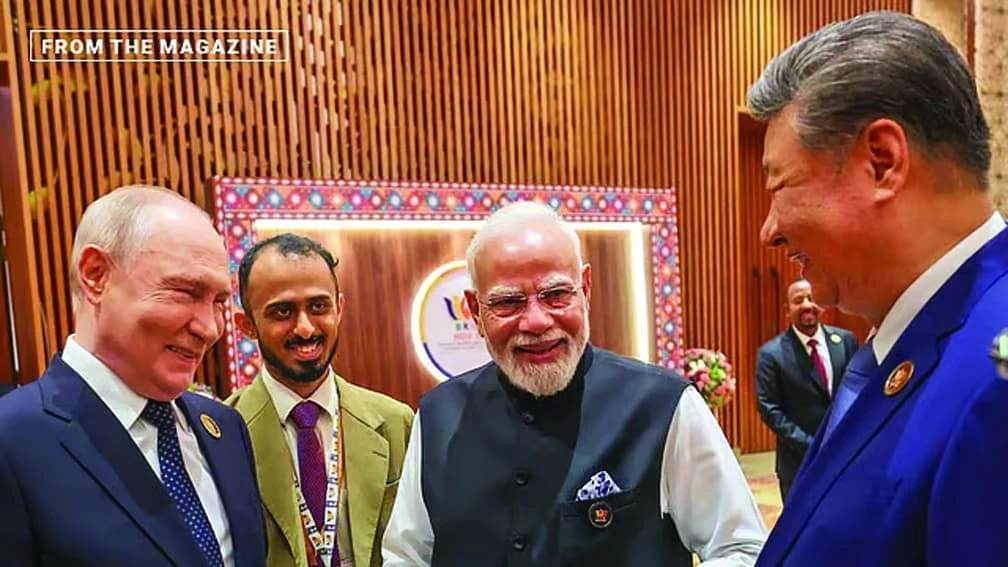
everywhere at that time in the name of protesting the visit of Indian Prime
Minister Narendra Modi as a guest in our celebration of 50th year of
independence.
Millions of Madrasa students are regularly used by the
Hefazot leaders for attacking government offices and establishments belong to
liberal secular people. Given the growing influence of these terrorist outfits,
Bangladesh population, especially the youths are quite vulnerable to such
threats. These threats include exposure to extremist ideology and propaganda
through internet. We are watching that the social media sites are flooded by
militancy promoting messages from Bangladesh.
Violent protests and agitations by Madrasa students resulted
in a trail of deaths and destruction. Not only in Brahmanbaria, terrorist
attacks at Salta, Faridpur, Hathazari in Chittagong and Baitul Mokarram Mosque
in Dhaka show our acute vulnerabilities. Terrorists have been able to induce
terror and fear amongst the population by their violent actions.
As a developing economy, we have to recognise the power of the
youth, a force which has great potential and one that needs to be harnessed
towards nation-building. The current trend of the youth being hyper-active on
the social media needs to be channeled by diverting their energy towards
national integration and building a pluralistic society. The situation, as it
is developing, has to prompt the government to redesign national security
policy with economic progress as its core.
Two violent and brutal incidents - the Shapla Square episode
on May 5 in 2013 and this time the anti-Modi agitations by Hefazot, highlights
persisting threats to the internal security of the country, which have become
complex and extensive over the years.
The destructions in Brahmanbaria clearly exposed two things
- the weakness of the ruling party to mobilise themselves and the common people
and lack of coordination among various intelligence agencies and law
enforcement departments. Militant outfits get strength from the fragmentation
and confusion over the war on terror among the security, political and civil
society leadership in Bangladesh.
Another strong reason is inequality among the population.
Despite higher rate of GPD growth, the growth is highly uneven which is surging
inequality among the people even in various regions.
Tribalism, feudalism, weak governance, corruption and poor
socioeconomic conditions are threat enablers while sectarianism, orthodox
nationalism and extremism are threat multipliers. When surge of social media is
encouraging innovation across the world, the religious outfits in Bangladesh
are using these platforms for spreading communal and militant messages
provoking millions of teen aged and young Madrasa students to take law in their
hands. Violent non-state actors on the internet pose serious security challenges
for all of us.
Unfortunately, we do not expose our youth to even the
rudimentary aspects of national security and its impact on society. Besides
substantial issues like the survivability of nation states, it is important to
have the youth understand the basic concept of national security and the impact
it has on economic growth. This is very important in a country like Bangladesh
that has a very strong young demographic profile.
The time is now to take initiatives to think about national
security perception of the youths. This will instill a greater sense of
patriotism in them. I talked to a cross section of youths studying in public
and private universities and madrasas. My finding is disappointing. Secular
students think about career while the madrasa students are more oriented
towards grabbing the state power. This is time for us to think. We need more
schools than madrasas and we need to take initiatives to expose our families to
expose their children students to the very basics of national security and make
them realise that national security requires the active engagement of all
citizens, as it is a shared responsibility. If we are not serious about it, one
day we will see that the country is occupied by the militant outfits as it
happened in Pakistan.
Given the growing influence of Islamic militant ideology,
joblessness among the youths, high level of inequality among the population,
national security threats will be far more relevant to us than ever before. The
spread of terror networks is making the management of internal and external
security challenges increasingly complex.
Engaging the youth from all communities would empower and
encourage them to play a larger role in national security. Given the current
reality, wherein the youth - between 15 and 25 years of age - are being
indoctrinated, it would also help to get them away from fundamentalist outfits.
The youths are unfortunately involved in large scale violence, due to
instigation by some political parties, groups and individuals. All such actions
are highly detrimental to national well-being and national security. There is
an urgent need to promote awareness, through educational institutions, through
media, through community mobilisations about national security and its impact
on various facets of the country’s well-being.
Syed Ishtiaque Reza is the Editor in Chief of GTV.
আরও পড়ুন -